Over the past year, increased regulatory pressure in multiple regions like UK OFCOM and Australia's eSafety has led to higher operational costs, including infrastructure, security, and the need to work with more specialized service providers to keep the site online and stable.
If you value the community and would like to help support its continued operation, donations are greatly appreciated. If you wish to donate via Bank Transfer or other options, please open a ticket.
Donate via cryptocurrency:
Bitcoin (BTC):
Ethereum (ETH):
Monero (XMR):
HelpN2 gas tank options
Thread starterh4ppyhypoxia
Start date
You are using an out of date browser. It may not display this or other websites correctly. You should upgrade or use an alternative browser.
The main issue is oxygen not being fully displaced.. CO2 is not an issue in such a big space, if it were fully rid of oxygen. Otherwise you would feel like suffocating while sitting in the car normally
i mean this method is rated 8/10 for reliability and 7/10 for peacefulness according to pph but thats the eb way and it assumes you have the right setup its prbably one of the harder methods to prepare
Using a car interior for this purpose will require a lot of gas (>100cf). A automobile envelope is not designed to be air tight.
There are openings in the ventilation system, built in pressure relief valves, drain holes and various other places.
Then if it were to be sealed completely (which is doubtful) the CO2 would need to be displaced and ejected somehow.
Items like an EEBD hood, exit bag, etc take this into account along with the smaller volume for efficient use of gas.
Do you have recommend EEBD hood? if my test didnt work out (the car) , i would look into the hood you said. but do u have link or brand name for me to look it up ?
my brain cant handle my stupidity anymore, my ignorant is too much, my brain cell in constant chaos with no help.,the earth don't need me anymore, i am going home.
my brain cant handle my stupidity anymore, my ignorant is too much, my brain cell in constant chaos with no help.,the earth don't need me anymore, i am going home.
Yes, having 2x cylinders each set at 1/2 the flow rate needed, supplying to a single output, would equal 2x the flow.
It would also give 2x the time. The flow just has to be 1/2 for all this to work.
do you have any sources where i can look into this more? ive never considered this before and its something that would make this a lot easier for me so would it be ok to have 2 cylinders with their own regulators both set off at the same time with a flow rate of 8l/pm, ive actually never owned a regulator before, do flowmetres usually allow you to set specific numbers of L/PM or do they usually only allow you to set numbers that are multiples of 5
do you have any sources where i can look into this more? ive never considered this before and its something that would make this a lot easier for me so would it be ok to have 2 cylinders with their own regulators both set off at the same time with a flow rate of 8l/pm, ive actually never owned a regulator before, do flowmetres usually allow you to set specific numbers of L/PM or do they usually only allow you to set numbers that are multiples of 5
Do you have recommend EEBD hood? if my test didnt work out (the car) , i would look into the hood you said. but do u have link or brand name for me to look it up ?
my brain cant handle my stupidity anymore, my ignorant is too much, my brain cell in constant chaos with no help.,the earth don't need me anymore, i am going home.
I have seen others show their setups on this forum. Vizzy is one. They used an eebd hood.
They mentioned they got them on one of the china retail websites....Ali__
do you have any sources where i can look into this more? ive never considered this before and its something that would make this a lot easier for me so would it be ok to have 2 cylinders with their own regulators both set off at the same time with a flow rate of 8l/pm, ive actually never owned a regulator before, do flowmetres usually allow you to set specific numbers of L/PM or do they usually only allow you to set numbers that are multiples of 5
Actually just googled it and the confirmed it would work this way. 2x cylinders with flow rate set to 1/2 needed = output will be 1x flow rate but 2x the time.
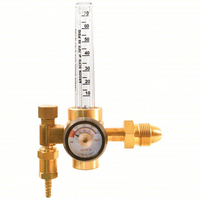
Yes flowmeters can be set to give a specific flow in L/m. They are usually made for a specific gas though, like argon etc.
There are correction factors when using a flowmeter like this with another gas, since gases are denser or less dense than the gas the meter was calibrated for.
This one is calibrated for SCFH (standard cubic feet per hour) which is imperial units.
For liters per minute there is a conversion: SCFH to LPM: LPM = SCFH × 0.47195 (google this)
This particular flow meter is a 'floating ball" type. Since it is calibrated for Argon, there is a conversion factor to use with other gases.
Nitrogen flow = Argon flow x 1.19 (google gas correction factors or conversion factors for floating ball flowmeters)
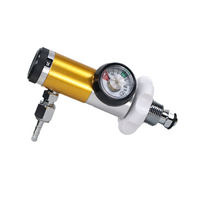
There are also 'click' style regulators that have the flowmeter built in.
They are harder to find though
so when they say the exit bag should be set in for 15 LMP that mean the SCFH should be keep on '31.78 SCFH' right ? the ball insite should be flowing on 31?
since 15 LPM (Liters Per Minute) is equal to 31.78 SCFH .?
i just goole and it said :
To get an actual outflow of 15 LPM of Nitrogen (N₂) using your Argon-calibrated flowmeter, the meter should read 0.45 SCFM (which is 26.71 SCFH).
so when they say the exit bag should be set in for 15 LMP that mean the SCFH should be keep on '31.78 SCFH' right ? the ball insite should be flowing on 31?
since 15 LPM (Liters Per Minute) is equal to 31.78 SCFH .?
i just goole and it said :
To get an actual outflow of 15 LPM of Nitrogen (N₂) using your Argon-calibrated flowmeter, the meter should read 0.45 SCFM (which is 26.71 SCFH).
15 l/m = 31.78 scfh
nitrogen = argon x 1.19 (for floating ball flowmeter)
To use N2 with an Argon flow meter, the flowmeter would show 26.7 scfh
This is the equivalent of 15 l/m or 31.78 scfh for N2. N2 is a lot less dense than Argon.
The actual volume of nitrogen passing through the meter will be higher than what the argon scale shows.
N2 can't float the ball up as high as the more dense Argon can.
Note, the flow meter is calibrated for Argon, hence the factor of 1.19.
31.78 / 1.19 = 26.7
15 l/m = 31.78 scfh
nitrogen = argon x 1.19 (for floating ball flowmeter)
To use N2 with an Argon flow meter, the flowmeter would show 26.7 scfh
This is the equivalent of 15 l/m or 31.78 scfh for N2. N2 is a lot less dense than Argon.
The actual volume of nitrogen passing through the meter will be higher than what the argon scale shows.
N2 can't float the ball up as high as the more dense Argon can.
Note, the flow meter is calibrated for Argon, hence the factor of 1.19.
31.78 / 1.19 = 26.7
This site uses cookies to help personalise content, tailor your experience and to keep you logged in if you register.
By continuing to use this site, you are consenting to our use of cookies.