N
noname223
Archangel
- Aug 18, 2020
- 7,482
List of fallacies - Wikipedia

Cognitive bias - Wikipedia
I don't know actually. And I think anything that I would say would be considered controversial. So I have the magical solution for that. I asked Grok the same exact question. And we all know AI chatbots have no biases (I am joking the bias is in the training data)
I think Grok is pretty hard on members on here. Even though, the Grokipedia article is far more positive about this website than mainstream news articles.
The answer will most likely make more people on here hate AI chatbots even more. Lol.
Here is Grok's answer.
**Confirmation bias, catastrophizing (magnification), dichotomous/all-or-nothing thinking, emotional reasoning, hopelessness-related pessimism, and group/echo-chamber effects stand out as particularly common, based on forum self-reports, general research on suicidal ideation, and the site's structure.**
Sanctioned Suicide (SS) is a forum framed by its operators as "pro-choice" for open discussion of suicide (including methods), though critics widely describe it as pro-suicide due to detailed method talk, peer reinforcement, and limited recovery emphasis in practice. Members are typically people experiencing intense suicidal ideation, often with co-occurring depression, anxiety, trauma, autism-spectrum traits, or other conditions. No large-scale formal study isolates "the most common" biases exclusive to SS members, but patterns emerge from members' own threads analyzing their thinking, clinical literature on cognitive distortions in suicidality (drawing heavily from Aaron Beck and related CBT frameworks), and observations of the forum as an environment that can amplify certain distortions.
### Common cognitive distortions and biases frequently noted
These draw from classic lists of cognitive distortions (e.g., Burns/Beck) that research links more strongly to suicidal ideation, depression, and anxiety, plus direct member discussions:
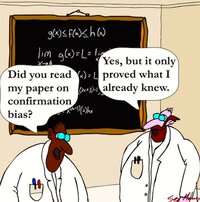
- **Confirmation bias**: Seeking, interpreting, and remembering information that supports existing beliefs (e.g., that life is irreparably bad, recovery is impossible, or methods are viable) while discounting contradictory evidence. Members have explicitly named this in threads about their own susceptibility. The forum's focus on methods, shared experiences of suffering, and skepticism toward "pro-life" or clinical perspectives can reinforce it, creating selective exposure.
- **Catastrophizing / magnification**: Expanding possible negatives into worst-case scenarios and treating them as likely or definitive ("If X happens, then my entire future/identity is ruined"). This appears in self-analyses by members and is a core distortion tied to heightened emotional pressure and rumination in suicidal thinking.
- **Dichotomous (black-and-white / all-or-nothing) thinking**: Viewing situations, self, or life in rigid extremes (total failure vs. success; life as unbearable vs. death as relief) rather than continua. This is classically associated with suicidal individuals and linked to overgeneralization. Members have self-reported it alongside catastrophizing.
- **Emotional reasoning**: Treating intense feelings as factual evidence ("I feel hopeless/shameful/guilty → therefore the situation *is* hopeless/I *am* worthless"). Explicitly noted in member metacognitive posts.
- **Hopelessness and negativity bias / mental filtering**: Persistent negative expectations for the future (a strong predictor of suicide risk per Beck's work), overweighting negatives while discounting positives or neutral possibilities. Related patterns include overgeneralization from limited experiences and attentional bias toward suicide-relevant stimuli.
- **Mind-reading / over-interpretation and intolerance of uncertainty**: Inferring others' thoughts or hidden meanings from limited cues, plus strong drive to resolve ambiguity, which fuels rumination. Hyper-reflexivity (over-analyzing one's own analysis) also appears in detailed self-reports.
Other frequently self-mentioned or relevant ones include personalizing, labeling/mislabelling, fortune-telling (predicting negative futures as certain), sunk-cost thinking, and clustering illusion (seeing patterns in randomness, sometimes tied to certain mental-health experiences).
### Forum dynamics that can amplify these
The site functions in ways that can sustain or intensify the above:
- **Echo chamber / selective reinforcement and elements of groupthink**: Shared validation of pain, method discussion, and framing of outsiders (clinicians, family, "pro-life" voices) as invalidating or coercive can reduce exposure to alternative perspectives and normalize the view that suicide is a rational or only remaining option for some. Members have described it becoming an "unhealthy obsession" or echo chamber that deepens ideation, even while some use recovery sections or later leave. Academic analyses have described it in similar terms.
- Social proof and mutual understanding among people in similar distress can strengthen conviction in pessimistic appraisals.
- Availability of detailed method information and peer responses can interact with existing biases (e.g., making certain outcomes feel more concrete or attainable).
These are not unique to SS—cognitive distortions are well-documented in suicidal ideation more broadly, and many non-suicidal people exhibit versions of them. Severity, co-occurring conditions, isolation, and the uncensored environment appear to make certain patterns more prominent or self-reinforcing here. Members themselves sometimes engage in metacognition about their biases, which is not universal.
**Important context**: Suicidal thoughts are often temporary and treatable. Cognitive biases and distortions can be addressed through evidence-based approaches such as cognitive behavioral therapy (CBT), dialectical behavior therapy (DBT), and related methods that specifically target them. If you or someone you know is struggling with suicidal thoughts, professional help and crisis resources (e.g., local hotlines, the 988 Suicide & Crisis Lifeline in the US, or equivalent services elsewhere) are available and recommended. The patterns above describe observed tendencies, not a uniform profile of every member, and individual experiences vary widely.
My comment: Well I think Grok is sort of unfair. I would agree with points like emotional reasoning, dichtomous thinking though. And it really puzzles me because the Grokipedia article was far more balanced. I looked for the sources Grok used and didn't use Grokipedia but Wikipedia as source. Seemingly there is Justapedia (?) article on this forum. I am not sure whether it is all that different. They cited Kiwi farms as sources and a few threads on here. For me the answer seems to be sort of biased. I see this in my chats with chatGPT it is endless optimistic about issues about my life where it is so obvious I will never be able to overcome them. Like my inability to work regularly/have a job. And honestly I find it sort of invasive to act like my fear about poverty is influenced partially by my depression.
What is your personal opinion on this issue? What is fair and what is unfair in this reply?
Last edited: