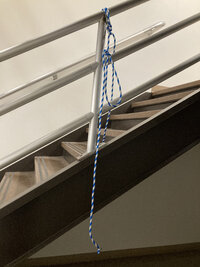
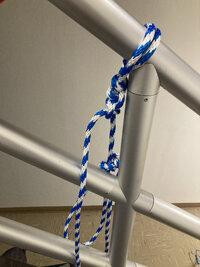
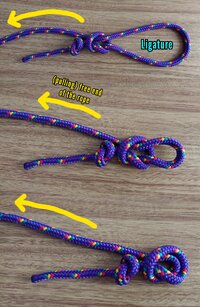
(OP mentions WLL)
Breaking Load/ Ultimate Load/ Breaking-Tensile Strength: offers a measure of a rope's maximum capability.
Working Load Limit (WLL): defines the limits within which the rope can be safely used.
 "Working Load Limit" (WLL)
The safe maximum load a rope can carry in normal use, taking into account wear and environmental conditions.
Typically 15-25% of the tensile strength.
Accounts for real world factors like knots, bends, abrasion and weather.
Is designed to safely handle under normal working conditions. It takes into account safety factors, potential variations in loading, and other considerations to ensure that the equipment operates reliably without failure during its intended use.
It acts as the guiding metric for determining how much weight or stress a piece of equipment can handle regularly without risk of failure.
It's not the same as:
"Breaking Load" (also known as "Ultimate Load" or "Breaking/Tensile Strength")
The maximum load a rope can withstand before it breaks in controlled conditions.
Tested in the lab by applying increasing tension until the rope breaks.
Measured without knots, friction or environmental stress.
Refers to the maximum load or force that a piece of equipment or material can withstand before it fails or breaks. It is the point at which the material or equipment experiences permanent deformation or catastrophic failure.
Is the amount of stress or weight that a component can withstand before it fails or breaks. This measurement is determined under ideal conditions and is not meant for regular operational use.
Sources:
1,
2,
3,
4