

G
GHome
Member
- Feb 7, 2025
- 6
Yes, it was from DMC. Thank you. So maybe it is good. I will not open it until "the day" come.Did you get it from DMC? They ship it vacuum sealed, so that could be why it feels hard
We wanted to share a quick update with the community.
Our public expense ledger is now live, allowing anyone to see how donations are used to support the ongoing operation of the site.
👉 View the ledger here
Over the past year, increased regulatory pressure in multiple regions like UK OFCOM and Australia's eSafety has led to higher operational costs, including infrastructure, security, and the need to work with more specialized service providers to keep the site online and stable.
If you value the community and would like to help support its continued operation, donations are greatly appreciated. If you wish to donate via Bank Transfer or other options, please open a ticket.
Donate via cryptocurrency:
Yes, it was from DMC. Thank you. So maybe it is good. I will not open it until "the day" come.Did you get it from DMC? They ship it vacuum sealed, so that could be why it feels hard


I know @bed is hardly online these days and likely doesn't watch this thread (hence the tag, just in case), but after initially being calmed by this thread re: my vintage SN, I've noticed some significant issues. Would appreciate a response when possible, from OP or anyone knowledgeable:
The quote that follows and the citation for it refer strictly to medication, which SN isn't. It's a chemical. I don't know what the regulations are on chemicals, but in any event, this source only applies to legitimate-market pharmaceuticals, and only in the USA. Additionally, the conditions of whatever "lab" our questionable SN came from can't be verified to be at the level of commercial ones.
Again, apples and oranges—notice it says "If your curing salt is only salt and sodium nitrate or sodium nitrite". Not only do we know curing salt ≠ sodium nitrite, but this source is presumably about the expiration for the purposes of curing meat. In any event, curing salt is around 90% sodium chloride.
Where? The link that follows is to a topic page on SciendeDirect, not an article. There are many previews of many articles listed on that page.
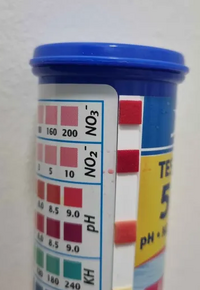
What's the source on this? There is none whatsoever, not even a link to a post here or OP saying it was their own information. And to make matters worse there are five chemical indicator colors on that test strip. With no reference gradients, or even confirmation of which chemicals they even are.

I am absolutely not above bumping my own post in an effort to draw attention to it, so that it either might be more widely seen, or have its criticism addressed

I know @bed is hardly online these days and likely doesn't watch this thread (hence the tag, just in case), but after initially being calmed by this thread re: my vintage SN, I've noticed some significant issues. Would appreciate a response when possible, from OP or anyone knowledgeable:
The quote that follows and the citation for it refer strictly to medication, which SN isn't. It's a chemical. I don't know what the regulations are on chemicals, but in any event, this source only applies to legitimate-market pharmaceuticals, and only in the USA. Additionally, the conditions of whatever "lab" our questionable SN came from can't be verified to be at the level of commercial ones.
Again, apples and oranges—notice it says "If your curing salt is only salt and sodium nitrate or sodium nitrite". Not only do we know curing salt ≠ sodium nitrite, but this source is presumably about the expiration for the purposes of curing meat. In any event, curing salt is around 90% sodium chloride.
Where? The link that follows is to a topic page on SciendeDirect, not an article. There are many previews of many articles listed on that page.
What's the source on this? There is none whatsoever, not even a link to a post here or OP saying it was their own information. And to make matters worse there are five chemical indicator colors on that test strip. With no reference gradients, or even confirmation of which chemicals they even are.

Again, apples and oranges—notice it says "If your curing salt is only salt and sodium nitrate or sodium nitrite". Not only do we know curing salt ≠ sodium nitrite, but this source is presumably about the expiration for the purposes of curing meat. In any event, curing salt is around 90% sodium chloride.
What's the source on this? There is none whatsoever, not even a link to a post here or OP saying it was their own information. And to make matters worse there are five chemical indicator colors on that test strip. With no reference gradients, or even confirmation of which chemicals they even are.
From article that Bed linked: "Prague powder #1, Prague powder #2, tinted cure and pink salt are all curing salt. Prague powder #1 contains table salt and sodium nitrate; Prague powder #2, table salt and sodium nitrite as do tinted cure and pink salt. [..] Keeping these curing salts dry will keep them fresh and usable indefinitely."Again, apples and oranges—notice it says "If your curing salt is only salt and sodium nitrate or sodium nitrite". Not only do we know curing salt ≠ sodium nitrite, but this source is presumably about the expiration for the purposes of curing meat. In any event, curing salt is around 90% sodium chloride.
It's possible that article or link has been removed/changed.Where? The link that follows is to a topic page on SciendeDirect, not an article. There are many previews of many articles listed on that page.
 www.flinnsci.com
What's the source on this? There is none whatsoever, not even a link to a post here or OP saying it was their own information. And to make matters worse there are five chemical indicator colors on that test strip. With no reference gradients, or even confirmation of which chemicals they even are.
I'll start with the disclaimer that I'm in the same boat regarding chemistry, but research is among my stronger suits. I have been looking into this independently and have also hit a wall finding anything definitive, which is what I would prefer when making decisions about whether or not I will die and think all members deserve as robust and well-sourced a body of information as possible on the matter. Hopefully someone with more expertise comes along sooner than later.I am no chemist but have been looking into as much information as possible to try to give the most reliable info that I can. Forum members with aptitude for research and/or chemistry are also welcome to add to the combined knowledge of the forum to help with this aim.
What I was getting at there is that since the ingredient which is by far the primary constituent of Prague powder is something which does not expire, saying Prague powder by extension doesn't expire is a sound inference, but saying so about pure sodium nitrite is not.Unless you are claiming that the table salt is preventing the nitrite and nitrate in that curing salt mix from degradation, then the original phrasing still describes high stability over an indefinite time if stored properly. While the statement is made in the context of meat curing, that context does not change the underlying chemistry, and it still supports that sodium nitrite does not undergo meaningful degradation and therefore has no practical expiration date when stored properly.
Perhaps it can be changed or updated, ideally with an archived version of whatever page were to take its place.It's possible that article or link has been removed/changed.
Again, comparing our purposes—"the industry" is the chemical industry, where labs, sellers, and storage methods are reputable and quality-controlled, vs. guys possibly hanging out on the forum to peddle their home-cooked wares. Anyone who's not bought from an industrial/scientific source has absolutely no idea about the conditions of their product before it reached them, nor any way of finding out. The chemicals could well have been left exposed to open air for any period of time, ultimately shortening their shelf life.it seems as though there is not much information discussing ambient storage because the 'knowledge' is taken for granted across the industry that SN is stable, so research on degradation etc only takes place in extreme temperatures and conditions.
This is helpful and good to see, though cf. my previous point re: pratfalls of equating reputable industrial sources with sketchbags like DMC who send "Happy New Years" texts to prospective clients he's eager toData sheets like the one linked below do not have expiry dates, just that storage should be in a cool, dry place (Section 7) and that the shelf life is indefinite (Section 10). The absence of an expiry duration or warning of time-limited stability seems to inform the industry that expiry in ambient conditions is not considered an issue, with only hygroscopicity noted as a concern.
Sodium Nitrite SDS (Safety Data Sheet) | Flinn Scientific
Sodium Nitrite ⺠Flinn Scientific SDS Sheets ⺠Learn health and safety information about chemicals.
This is a much more informative photo and if it was provided directly to mods on request by a known source, that's about as good as we can get. As before, if the original post could be updated with this photo and the relevant context (including the age of this batch of SN, unless it's the same one), I think that would only serve to boost its credibility.As addressed above earlier, the author of that photo wish to remain anonymous and I respect that but I have verified them.
However I did ask them if they could do another test, and this was the result:
View attachment 192845



If air moisture didnt get to your SN, it should be fine. I read some chemical books and it said that for the SN to start changing its chemical composition the temperature needs to be extremely high, above 320 celsius degrees .I don't know if my SN is still good. Where I live it's fucking cold in winter and fucking warm in summer.
I don't want to open it because air leakage is not good and it becomes hard to get nowadays.
Shit ! Give me just that fucking N !!
Thanks for the informationIf air moisture didnt get to your SN, it should be fine. I read some chemical books and it said that for the SN to start changing its chemical composition the temperature needs to be extremely high, above 320 celsius degrees .
 I really hope it's still good because it's my only option since N isn't available anymore. I'm not strong enough for hanging myself.
Hoping someone can give some insight regarding SN mixed with water. January 25th of this year I was almost certain I wanted to ctb so I had everything prepared, mixed the 25g with water, crushed clonazepam with water etc. Took the meto & Tylenol but waited more than 40minI'd like to preface this to hopefully help people not make rash decisions due to the fear that their suicide method will go "bad" and they feel forced to take it before they truly want to. Freedom of choice means everything.
There is a lot of misconception on here about how long both of these chemicals last before they are no longer useable. both SN and N are highly stable compounds in general when stored in a cool, dry, dark environment and unopened the change in potency will diminish very slowly over time. Even when stored in "unstable" conditions, they both will last for a very long time and the loss of potency is negligible. Almost all chemicals are good past their expiration date, an expiration date is not what you may think, " Since a law was passed in 1979, drug manufacturers are required to stamp an expiration date on their products. This is the date at which the manufacturer can still guarantee the full potency and safety of the drug." [1] most drugs will last for decades past expiration, some even for centuries. In the US expired drugs are sold to the military at a discounted price since legally they are no longer acceptable to be sold to the general public.
Stability of Sodium Nitrite
First we will look at SN since it is far more commonly used. "Curing salt has no hard expiration date. If your curing salt is only salt and sodium nitrate or sodium nitrite, it's good forever. Salt itself never goes bad, though yellowing and other discoloration is common. Moisture is a potential problem as it attracts microbes. To prevent such threats, store curing salts in dry, moisture-lock, airtight containers and in a cool dry place, such as your pantry or a dry goods storage closet. Do not refrigerate or freeze curing salt." [2]
Some people are worried that clumping lowers it's efficacy, this is not the case. Here is a picture of pure sodium nitrite [3] and as you can see there is clumping. Small compounds will slowly stick together over time, it is natural and usually has nothing to do with it's efficacy.
View attachment 128403
Another article showing that is it highly stable
click here
This is a picture of an aquarium test strip that was used on SN that has been sitting in a bottle of tap water with a cap on for almost a year. previously it was believed you needed to use distilled water to insure sodium nitrite would breakdown into sodium nitrate at a much slower rate. considering this SN is still useable in very subpar conditions shows this is not the case as well as shows how stable it is as a compound.
View attachment 128405
This shows Sodium Nitrite is much more stable than previously thought, even in unpleasant environments.
Stability of Nembutal (pentobarbital)
Onto Nembutal, although it isn't talked about much anymore I still think it would be a good idea to show some information regarding it. In the past there was a lot of fear that it would go bad past the due date, as well as once it was opened you had to drink it in a certain amount of time. I would like to showcase why this is wrong.
I believe these two articles are the most notable and shows N in both it's stable and unstable environment and how it reacts.
Article 1: https://pubmed.ncbi.nlm.nih.gov/26234474/
The biggest takeaway from this is, "We determined that the drug degraded at a maximum of 0.5% per year in our preparation (alkaline water/propylene glycol/ethanol) when stored in the dark at room temperature. "
Article 2: https://pubmed.ncbi.nlm.nih.gov/23982045/
The biggest takeaway from this is, "the pentobarbital sodium in injection appears to be very stable, because the loss in potency was only about 6.2% after it was boiled in water for 1.5 hours."
This isn't really related but I thought I'd share this as well. There is an anecdotal report on Erowid about a person who took N recreationally for an extended period of time. The biggest thing to note is they found expired vet N had a worse taste. "some of the bottles were past a use-by date they seemed to be the most foul to drink and provided an inferior experience". An inferior experience in this context refers to the high and possibly that the potency of N was only slightly diminished.
Pentobarbital - Erowid Exp - 'Nice but Zombie Effects Long Term'
An Experience with Pentobarbital. 'Nice but Zombie Effects Long Term' by Whynotwww.erowid.org
As you can see N is also a highly stable compound and will last long past it's shelf life with very little loss in potency. When the liquid turns cloudy it means nothing in terms of efficacy loss and is just an arbitrary rule in determining it is no longer good for sterile use in a medical setting.
I hope this thread has helped to clear up the air that Sodium Nitrite and Nembutal do not go bad quickly. You do not have to make a rushed decision to ctb because of the fear that either compound will not work. both substances are highly lethal decades past expiration. Exercise caution and make sure ctb is the right choice for you.
[1] https://www.health.harvard.edu/staying-healthy/drug-expiration-dates-do-they-mean-anything
[2] https://www.leaf.tv/articles/does-curing-salt-expire/
[3] https://en.wikipedia.org/wiki/Sodium_nitrite
That's no longer validHello,
one Question please. Could someone please tell me what DMC is as a source?
Thanks so much

It's used for curing meats.Did you have to give a reason to buy SN? I am stuck on what to say?
Good info. Thanks.So, anyhow, I've posted this elsewhere, but here it is again, because it deserves to be on a top post.
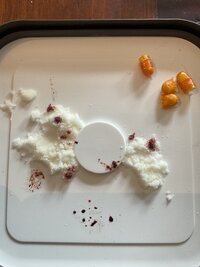
If you pack SN into gel caps, they will absorb moisture from the cap and contaminate the SN, turning it into sodium nitRATE, which will not kill you quickly.
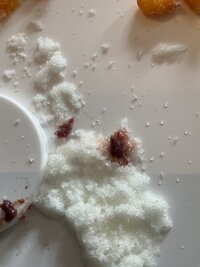
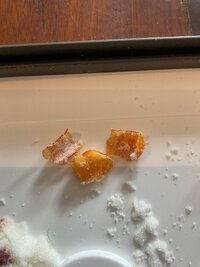
I posted pictures above of what my SN capsules looked like after a couple weeks. Here they are after four months, along with pure SN and the clear capsules they were originally packed into. As you can see, the encapsuled SN is now orange. It should not be like that. Note that the capsules are in a vacuum-sealed bag, so this is not due to absorbtion of water THROUGH the capsule wall. Given that gel capsules are mainly water, it seems to me that the answer to why this happened must be that the SN — which is very hysophilic — absorbed the water from the capsule's walls.
If you plan on taking encapsulated SN, you must encapsulate it very shortly before you take it.
Also, just for reference's sake, each of those packets, including the capsules, is a 25 gram dose. So your looking at three times what's necessary to kill you here.
View attachment 193012
Good to know. I'd like to mix mine in a water bottle several days in advance.I'd like to preface this to hopefully help people not make rash decisions due to the fear that their suicide method will go "bad" and they feel forced to take it before they truly want to. Freedom of choice means everything.
There is a lot of misconception on here about how long both of these chemicals last before they are no longer useable. both SN and N are highly stable compounds in general when stored in a cool, dry, dark environment and unopened the change in potency will diminish very slowly over time. Even when stored in "unstable" conditions, they both will last for a very long time and the loss of potency is negligible. Almost all chemicals are good past their expiration date, an expiration date is not what you may think, " Since a law was passed in 1979, drug manufacturers are required to stamp an expiration date on their products. This is the date at which the manufacturer can still guarantee the full potency and safety of the drug." [1] most drugs will last for decades past expiration, some even for centuries. In the US expired drugs are sold to the military at a discounted price since legally they are no longer acceptable to be sold to the general public.
Stability of Sodium Nitrite
First we will look at SN since it is far more commonly used. "Curing salt has no hard expiration date. If your curing salt is only salt and sodium nitrate or sodium nitrite, it's good forever. Salt itself never goes bad, though yellowing and other discoloration is common. Moisture is a potential problem as it attracts microbes. To prevent such threats, store curing salts in dry, moisture-lock, airtight containers and in a cool dry place, such as your pantry or a dry goods storage closet. Do not refrigerate or freeze curing salt." [2]
Some people are worried that clumping lowers it's efficacy, this is not the case. Here is a picture of pure sodium nitrite [3] and as you can see there is clumping. Small compounds will slowly stick together over time, it is natural and usually has nothing to do with it's efficacy.
View attachment 128403
Another article showing that is it highly stable
click here
This is a picture of an aquarium test strip that was used on SN that has been sitting in a bottle of tap water with a cap on for almost a year. previously it was believed you needed to use distilled water to insure sodium nitrite would breakdown into sodium nitrate at a much slower rate. considering this SN is still useable in very subpar conditions shows this is not the case as well as shows how stable it is as a compound.
View attachment 128405
This shows Sodium Nitrite is much more stable than previously thought, even in unpleasant environments.
Stability of Nembutal (pentobarbital)
Onto Nembutal, although it isn't talked about much anymore I still think it would be a good idea to show some information regarding it. In the past there was a lot of fear that it would go bad past the due date, as well as once it was opened you had to drink it in a certain amount of time. I would like to showcase why this is wrong.
I believe these two articles are the most notable and shows N in both it's stable and unstable environment and how it reacts.
Article 1: https://pubmed.ncbi.nlm.nih.gov/26234474/
The biggest takeaway from this is, "We determined that the drug degraded at a maximum of 0.5% per year in our preparation (alkaline water/propylene glycol/ethanol) when stored in the dark at room temperature. "
Article 2: https://pubmed.ncbi.nlm.nih.gov/23982045/
The biggest takeaway from this is, "the pentobarbital sodium in injection appears to be very stable, because the loss in potency was only about 6.2% after it was boiled in water for 1.5 hours."
This isn't really related but I thought I'd share this as well. There is an anecdotal report on Erowid about a person who took N recreationally for an extended period of time. The biggest thing to note is they found expired vet N had a worse taste. "some of the bottles were past a use-by date they seemed to be the most foul to drink and provided an inferior experience". An inferior experience in this context refers to the high and possibly that the potency of N was only slightly diminished.
Pentobarbital - Erowid Exp - 'Nice but Zombie Effects Long Term'
An Experience with Pentobarbital. 'Nice but Zombie Effects Long Term' by Whynotwww.erowid.org
As you can see N is also a highly stable compound and will last long past it's shelf life with very little loss in potency. When the liquid turns cloudy it means nothing in terms of efficacy loss and is just an arbitrary rule in determining it is no longer good for sterile use in a medical setting.
I hope this thread has helped to clear up the air that Sodium Nitrite and Nembutal do not go bad quickly. You do not have to make a rushed decision to ctb because of the fear that either compound will not work. both substances are highly lethal decades past expiration. Exercise caution and make sure ctb is the right choice for you.
[1] https://www.health.harvard.edu/staying-healthy/drug-expiration-dates-do-they-mean-anything
[2] https://www.leaf.tv/articles/does-curing-salt-expire/
[3] https://en.wikipedia.org/wiki/Sodium_nitrite


As an SN survivor, you go really blue. I'm pale as it is, and when I took SN, I got even paler. I didn't get to look at my face because of the circumstances I was in, but I did get a picture of my hand, which shows blue nails and how pale I was.how severe is the side effect of nails, lips, other extremities, turning blue when using SN method? especially if you are a relatively pale/light-skinned person already.

I'm from the UK, is there an easy way of getting SN? All I've seen is purity salt on Amazon, but it says 0.6% on it. I just want some advice on how to get it.I'd like to preface this to hopefully help people not make rash decisions due to the fear that their suicide method will go "bad" and they feel forced to take it before they truly want to. Freedom of choice means everything.
There is a lot of misconception on here about how long both of these chemicals last before they are no longer useable. both SN and N are highly stable compounds in general when stored in a cool, dry, dark environment and unopened the change in potency will diminish very slowly over time. Even when stored in "unstable" conditions, they both will last for a very long time and the loss of potency is negligible. Almost all chemicals are good past their expiration date, an expiration date is not what you may think, " Since a law was passed in 1979, drug manufacturers are required to stamp an expiration date on their products. This is the date at which the manufacturer can still guarantee the full potency and safety of the drug." [1] most drugs will last for decades past expiration, some even for centuries. In the US expired drugs are sold to the military at a discounted price since legally they are no longer acceptable to be sold to the general public.
Stability of Sodium Nitrite
First we will look at SN since it is far more commonly used. "Curing salt has no hard expiration date. If your curing salt is only salt and sodium nitrate or sodium nitrite, it's good forever. Salt itself never goes bad, though yellowing and other discoloration is common. Moisture is a potential problem as it attracts microbes. To prevent such threats, store curing salts in dry, moisture-lock, airtight containers and in a cool dry place, such as your pantry or a dry goods storage closet. Do not refrigerate or freeze curing salt." [2]
Some people are worried that clumping lowers it's efficacy, this is not the case. Here is a picture of pure sodium nitrite [3] and as you can see there is clumping. Small compounds will slowly stick together over time, it is natural and usually has nothing to do with it's efficacy.
View attachment 128403
Another article showing that is it highly stable
click here
This is a picture of an aquarium test strip that was used on SN that has been sitting in a bottle of tap water with a cap on for almost a year. previously it was believed you needed to use distilled water to insure sodium nitrite would breakdown into sodium nitrate at a much slower rate. considering this SN is still useable in very subpar conditions shows this is not the case as well as shows how stable it is as a compound.
View attachment 128405
This shows Sodium Nitrite is much more stable than previously thought, even in unpleasant environments.
Stability of Nembutal (pentobarbital)
Onto Nembutal, although it isn't talked about much anymore I still think it would be a good idea to show some information regarding it. In the past there was a lot of fear that it would go bad past the due date, as well as once it was opened you had to drink it in a certain amount of time. I would like to showcase why this is wrong.
I believe these two articles are the most notable and shows N in both it's stable and unstable environment and how it reacts.
Article 1: https://pubmed.ncbi.nlm.nih.gov/26234474/
The biggest takeaway from this is, "We determined that the drug degraded at a maximum of 0.5% per year in our preparation (alkaline water/propylene glycol/ethanol) when stored in the dark at room temperature. "
Article 2: https://pubmed.ncbi.nlm.nih.gov/23982045/
The biggest takeaway from this is, "the pentobarbital sodium in injection appears to be very stable, because the loss in potency was only about 6.2% after it was boiled in water for 1.5 hours."
This isn't really related but I thought I'd share this as well. There is an anecdotal report on Erowid about a person who took N recreationally for an extended period of time. The biggest thing to note is they found expired vet N had a worse taste. "some of the bottles were past a use-by date they seemed to be the most foul to drink and provided an inferior experience". An inferior experience in this context refers to the high and possibly that the potency of N was only slightly diminished.
Pentobarbital - Erowid Exp - 'Nice but Zombie Effects Long Term'
An Experience with Pentobarbital. 'Nice but Zombie Effects Long Term' by Whynotwww.erowid.org
As you can see N is also a highly stable compound and will last long past it's shelf life with very little loss in potency. When the liquid turns cloudy it means nothing in terms of efficacy loss and is just an arbitrary rule in determining it is no longer good for sterile use in a medical setting.
I hope this thread has helped to clear up the air that Sodium Nitrite and Nembutal do not go bad quickly. You do not have to make a rushed decision to ctb because of the fear that either compound will not work. both substances are highly lethal decades past expiration. Exercise caution and make sure ctb is the right choice for you.
[1] https://www.health.harvard.edu/staying-healthy/drug-expiration-dates-do-they-mean-anything
[2] https://www.leaf.tv/articles/does-curing-salt-expire/
[3] https://en.wikipedia.org/wiki/Sodium_nitrite


