AreWeWinning
·
- Nov 1, 2021
- 627
TL;DR Rope diameter may not matter much. Thicker ropes may just be as effective as thinner ones.
I usually follow threads about hanging, and the consensus appears to be that the rope shouldn't be too thick, because it may not block blood flow effectively. The logic is that surface area is inversely proportional to pressure, so for a given force, a thinner rope creates more pressure and blocks blood flow more effectively.
I have also been convinced that a thicker rope is less effective and can be problematic. However, I'm beginning to doubt whether this is really true. In this post, I'll explain what I mean. I'm also interested if anyone has any thoughts or personal experiences regarding this.
Rules of physics:
I don't know how to calculate the pulling force from the pressure when it comes to tourniquets or ropes. However, I have a feeling that the idea of thicker ropes being less effective in hanging may be false. When it comes to ropes, it may not matter too much whether a rope's width is 12, 16, 20, or 25 mm (1/2, 5/8, 3/4, or 1 inch). A slightly thicker rope may be just as effective, or the difference may be insignificant.
I'm not saying that using something overly thick (e.g. a bedsheet) would also work well. However when the thickness of the ligature is within reasonable limits (e.g. it's an actual rope), there is no practical difference in effectiveness in my experience.
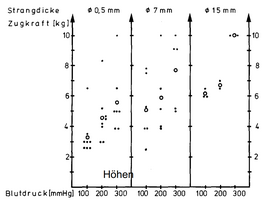
What's interesting is that the phenomenon I described above – that wider tourniquets require less pressure – is much more pronounced with narrower tourniquets. This is especially relevant when it comes to ropes, because ropes are quite narrow to begin with. If a tourniquet (or rope) is quite narrow, the pressure required to stop blood flow drops sharply as its width is increased. This effect is clearly visible in the graph below. (Source: Occlusion of Arterial Flow in the Extremities at Subsystolic Pressures Through the Use of Wide Tourniquet Cuffs, 1993, Graham et al.)
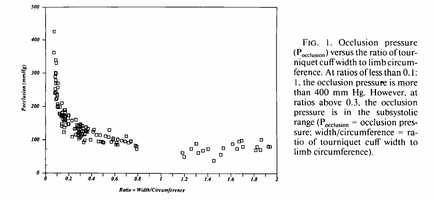
I think this graph is very relevant when it comes to ropes around the neck. Any rope below about 25 mm (or 1 inch) would fall within the far left portion of the graph. This means that a thicker rope will require significantly less pressure to stop blood flow. I believe this is the reason why slightly thicker ropes work equally well as thinner ones.
What is known is that surface pressure at the skin doesn't translate well to deeper tissues. This is why narrower tourniquets are less effective. The pressure has to be quite high to pinch and completely shut the arteries.
With wider tourniquets, surface pressure translates more effectively into deeper tissues. They may not shut the arteries completely, but even just compressing them over a longer section may create enough friction resistance to stop blood flow. As one research paper puts it:
So, what do you think? Are thicker ropes less effective, more effective, or is there no significant difference? What's your analysis or personal experience?
I usually follow threads about hanging, and the consensus appears to be that the rope shouldn't be too thick, because it may not block blood flow effectively. The logic is that surface area is inversely proportional to pressure, so for a given force, a thinner rope creates more pressure and blocks blood flow more effectively.
I have also been convinced that a thicker rope is less effective and can be problematic. However, I'm beginning to doubt whether this is really true. In this post, I'll explain what I mean. I'm also interested if anyone has any thoughts or personal experiences regarding this.
Research on tourniquets
What got me thinking is the scientific research on tourniquets (source). Research says that wider tourniquets are more effective at stopping blood flow and require less pressure. Note that contact pressure is not the same as the force used to tighten the tourniquet. Still, the relationship between width and required pressure cannot be ignored and is quite relevant.Rules of physics:
- For a given pressure, force is proportional to surface area. So if the required pressure were constant, wider tourniquets would require proportionally greater pulling force.
- For a given surface area, force is proportional to pressure. So for the same tourniquet width, less pressure means less pulling force.
I don't know how to calculate the pulling force from the pressure when it comes to tourniquets or ropes. However, I have a feeling that the idea of thicker ropes being less effective in hanging may be false. When it comes to ropes, it may not matter too much whether a rope's width is 12, 16, 20, or 25 mm (1/2, 5/8, 3/4, or 1 inch). A slightly thicker rope may be just as effective, or the difference may be insignificant.
Anecdotal evidence
First, there's anecdotal evidence to support this idea. For example, when I test losing consciousness, it doesn't matter whether I use a thin rope, a thick rope, or a belt. Seemingly, the amount of force I need to apply is roughly the same.I'm not saying that using something overly thick (e.g. a bedsheet) would also work well. However when the thickness of the ligature is within reasonable limits (e.g. it's an actual rope), there is no practical difference in effectiveness in my experience.
Rope ≠ tourniquet
Research on tourniquets usually discusses standard-size tourniquets, typically 3.8 cm (1.5 inches) wide or wider. These tourniquets behave slightly differently from ropes, because ropes are usually 25 mm (1 inch) or less in diameter.What's interesting is that the phenomenon I described above – that wider tourniquets require less pressure – is much more pronounced with narrower tourniquets. This is especially relevant when it comes to ropes, because ropes are quite narrow to begin with. If a tourniquet (or rope) is quite narrow, the pressure required to stop blood flow drops sharply as its width is increased. This effect is clearly visible in the graph below. (Source: Occlusion of Arterial Flow in the Extremities at Subsystolic Pressures Through the Use of Wide Tourniquet Cuffs, 1993, Graham et al.)
I think this graph is very relevant when it comes to ropes around the neck. Any rope below about 25 mm (or 1 inch) would fall within the far left portion of the graph. This means that a thicker rope will require significantly less pressure to stop blood flow. I believe this is the reason why slightly thicker ropes work equally well as thinner ones.
Mechanism of action
It's also interesting to consider the reason why wider tourniquets require less pressure. I have looked at some research papers, and as far as I can tell, the exact physical or physiological mechanism is not known.What is known is that surface pressure at the skin doesn't translate well to deeper tissues. This is why narrower tourniquets are less effective. The pressure has to be quite high to pinch and completely shut the arteries.
With wider tourniquets, surface pressure translates more effectively into deeper tissues. They may not shut the arteries completely, but even just compressing them over a longer section may create enough friction resistance to stop blood flow. As one research paper puts it:
It is possible that the different patterns of tissue pressure beneath narrow and wide tourniquets are associated with different mechanisms of flow reduction through compressed vessels. If a wide cuff produces a deformation in an artery that parallels its pressure profile, then blood flow would approach zero even without total collapse of the vessel because of the accumulation of frictional resistance to flow along the compressed length. On the other hand, flow elimination with a narrow cuff might require a pressure sufficient to collapse the vessel completely. Current models of flow in collapsible tubes have not explicitly considered this case. (internal citations omitted) (Source: Wide tourniquets eliminate blood flow at low inflation pressures, 1987, Moore et al.)
So, what do you think? Are thicker ropes less effective, more effective, or is there no significant difference? What's your analysis or personal experience?
Last edited: