Intoxicated
Man
- Nov 16, 2023
- 1,397
Definitions of shallow-water blackout
In the broad meaning, Shallow water blackout, also called "hypoxic blackout," is a loss of consciousness caused by cerebral hypoxia during breath-hold submersion, most commonly following pre-dive hyperventilation.In the narrow meaning, Shallow water blackout is the loss of consciousness of a swimmer caused by a lack of oxygen to the brain (cerebral hypoxia) following hyperventilation and breath-holding.
Shallow-water blackout (SWB) via hyperventilation and breath holding usually requires considerable time and is often difficult to achieve on purpose, but there is a much easier and faster way to produce "a loss of consciousness caused by cerebral hypoxia during breath-hold submersion" - this can be done by means of gas asphyxiation.
General idea
The method implies the following steps: several deep inhalations of an asphyxiant gas are performed, then the head is submerged in water while holding breath. If gas asphyxiation is done properly and the water is not too cold, then loss of consciousness (LOC) should happen in less than 1 minute (likely in 20 - 30 seconds) and death from drowning should happen in a few minutes.Mechanism of action
During the exchange of gases in the normal breathing process, the blood stream absorbs oxygen from air in the lungs, while carbon dioxide passes from the blood to the air. When you hold your breath, the exchange of gases slows, as "stale" air in the lungs is no longer replaced by "fresh" air.This process does not stop instantly, however. Some time will pass before you start to experience serious physical distress. For example, you would likely have time to pick up and put down an object, walk across a room, or find a chair and sit down before feeling compelled to breathe again.
However, when the lungs are filled with helium, a different process takes over. Oxygen is actually removed from the blood stream during the exchange of gases.
Source: https://www.cganet.com/inhaling-helium-party-fun-or-deadly-menace/
Helium can be replaced with any other gas that is able to displace oxygen without causing significant discomfort. In general, when the partial pressure of oxygen in the lungs is very low, the lungs remove oxygen from the bloodstream similarly to how they normally remove carbon dioxide. The resulting decrease in blood oxygen saturation produces loss of consciousness due to cerebral hypoxia.
In case if normal air is inhaled after hypoxia-induced loss of consciousness, the blood oxygen saturation increases back to its normal level and consciousness can be quickly regained. Submerging in water prevents inhalation of air, so the blood oxygen saturation will keep decreasing further due to consumption of oxygen via cellular metabolism, eventually leading to cardiac arrest followed by death, unless the head is removed from the water somehow.
Methods of inhalation
The chosen asphyxiant gas can be inhaled from a balloon, plastic bag, face mask, or directly from the canister containing the gas. Inhalation from the canister is risky due to potential exposure to high pressures and low temperatures. The easiest safe and reliable way of inhaling the gas is from a balloon. If balloons are not available, a plastic bag can be used instead.Inhaling from a balloon
1) 1 - 2 balloons are filled with approximately 12 - 20 L of asphyxiant gas in total (sufficient for 3 - 5 deep inhalations).
2) As much air as possible is exhaled from the lungs.
3) 3 - 5 deep inhalations of the asphyxiant gas through the mouth and deep intermediate exhalations are performed. If the sense of impending fainting occurs during exhalation or during the pause before the next inhalation, a new portion of the gas is immediately inhaled and the next step from the list is performed. If the sense of impending fainting occurs during inhalation, the next step from the list is performed right after the inhalation is completed.
4) Breathing is stopped, the nose is plugged by the hand, and the head is submerged in water.
The dependency between the volume V and the diameter D of a spherical balloon is:
LaTeX:
\[D = \sqrt[3]{\frac{6 \cdot V}{\pi}}\\
V = \frac{\pi \cdot D^{3}}{6}\]
| Volume, L | Diameter, cm |
| 4 | 19.7 |
| 8 | 24.8 |
| 12 | 28.4 |
| 16 | 31.2 |
| 20 | 33.7 |
(1 L = 1000 cm³)
Although even 1 - 2 deep inhalations followed by breath holding may be enough for losing consciousness, more inhalations should reduce the odds of regaining consciousness. On the other hand, 6 or more deep inhalations may be difficult to do because of the loss of bodily control, which may happen in just 15 seconds. So 3 - 5 deep inhalations seem to be optimal in terms of feasibility and effectiveness. By default, the time intervals between inhalations can be chosen based on the following table:
| Anticipated number of inhalations | Optimal interval between inhalations, s |
| 3 | 5 - 7.5 |
| 4 | 3.5 - 5 |
| 5 | 2.5 - 3.5 |
The best values depending on the individual specifics can be determined in tests. Note that balloons tend to blow up when the volume of the gas inside them exceeds their intended capacity limit.
When inhaling the gas from a balloon, inhalation of air through the nose should be excluded. The skill of blocking nasal breathing can be checked by trying to inhale exclusively through a small gap between the lips and closing the gap from time to time. If no air is inhaled despite the effort to inhale while there is no gap between the lips, then the blocking works well. Plugging the nose can serve as a more reliable alternative.
Inhaling from a plastic bag
A plastic bag can be used similarly to a balloon, although this way is less convenient and it's prone to mixing the asphyxiant gas with air.Another approach could be placing the bag (filled with the gas) over the head and holding it by the hands around the neck, minimizing the gas exchange between the inner volume of the bag and the outer atmosphere. In this case, the optimal volume of the bag is 25 - 40 L.
Gases that can be used for asphyxiation
Any gases that do not cause unpleasant symptoms due to their chemical properties can be used to displace oxygen from the lungs. Examples include: nitrous oxide, nitrogen, argon, helium, 1,1,1,2-tetrafluoroethane, 2,3,3,3-tetrafluoropropene, propane, n-butane, isobutane, hydrogen. Anesthetic gases (such as nitrous oxide and 1,1,1,2-tetrafluoroethane) can produce better sedation.Nitrous oxide (N₂O)
In many countries, food-grade nitrous oxide is available in medium-size disposable cylinders (0.95 - 4.5 L) containing 580 - 3000 g of N₂O or in small chargers (cartridges) containing 7.5 - 9 g of N₂O for making whipped cream. In case of using a medium-size cylinder, the gas can be released from it by means of a special nozzle or through N₂O regulator. In case of using small chargers, the gas can be released by means of a whipped cream dispenser (siphon) or N₂O cartridge cracker.The volume of the gas released from a small N₂O charger is usually close to 4 L and should be enough for 1 deep breath performed by an adult with average volume of the lungs.
A culinary siphon initially contains air, which should be displaced by N₂O before the gas coming from the siphon is used for ESWB. For 0.25 - 0.5 L siphons, at least 1 small N₂O charger should be used to displace air from there; for 1 L siphons, 2 or more N₂O chargers should be used.
When inhaling pure nitrous oxide, The time which elapses between the commencement of the inhalation and loss of full consciousness is extremely short, about twenty to thirty seconds on the average. Source: Anaesthetics and their administration (p. 244)
Nitrogen (N₂)
Nitrogen is sold in medium-size (0.95 - 2.2 L) disposable cylinders with M10 thread or in small chargers (cartridges) containing 2 g of N₂ for making nitro coffee. In case of using a medium-size cylinder, the gas can be released from it through M10 regulator or M10 valve. In case of using small chargers, the gas can be released using a whipped cream dispenser (siphon) or N₂O cartridge cracker.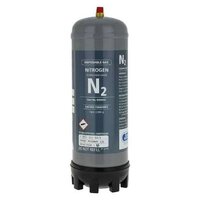
The volume of the gas released from 5 small 2g N₂ chargers is usually close to 8 L and should be enough for 2 deep breaths performed by an adult with average volume of the lungs.
A culinary siphon initially contains air, which should be displaced by N₂ before the gas coming from the siphon is used for ESWB. For 0.25 siphons, at least 2 small N₂ chargers should be used to displace air from there; for 0.5 L siphons, at 3 or more small N₂ chargers should be used; for 1 L siphons, 5 or more N₂ chargers should be used.
Argon (Ar), helium (He)
These two gases are sold in disposable cylinders with M10 thread similarly to nitrogen, but nitrogen is usually cheaper. It should be noted that Ar/CO₂ or He/O₂ mixtures are not appropriate for the given method.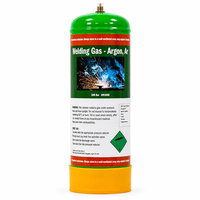
1,1,1,2-tetrafluoroethane (R-134a / HFC-134a), 2,3,3,3-tetrafluoropropene (R-1234yf / HFO-1234yf)
These gases are sold as refrigerants. In some countries, individuals are allowed to purchase them without any special certification. R-134a is usually cheaper than HFO-1234yf.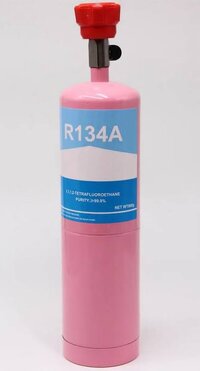

Propane, butane (n-butane, isobutane), and their mixes (LPG)
Such gases are sold as fuel or propellants (sometimes called "compressed air") in air dusters. They commonly contain odorants, which may have unpleasant smell and taste. When using a fuel canister, the gas can be released through a gas torch - see this post.Possible perceptions and symptoms from breathing asphyxiant gases
Frequent symptoms from inhaling asphyxiant gases include:- gradual clouding of consciousness, the sense of impending fainting;
- dimness, blurriness, narrowing of vision (won't be noticeable if the eyes are closed);
- increase of heart rate;
- moderate shortness of breath, desire to breathe more frequently and more deeply than usually;
- loss of control over the body;
- high-pitched ringing in the ears;
- wind-like noise in the ears;
- the sense of fullness in the head;
- numbness;
- tingling sensations in the skin (may appear when unconsciousness is close);
- euphoria (the odds of its appearing depend on the gas used and the speed of asphyxiation - faster loss of consciousness implies smaller chances of euphoria);
- impairment of short-term memory;
- convulsions.
- headache;
- nausea;
- retching, vomiting (exceptionally rare).
Levels of consciousness, bodily control, and sensitivity to unpleasant stimuli
Losing consciousness is a gradual process. Depending on how quickly oxygen escapes from the bloodstream, a transition from full consciousness to full unconsciousness may take 5 to 20 seconds or even longer if oxygen doesn't leave the blood fast enough. The transition doesn't take place immediately after the first inhalation of an asphyxiant gas; the minimum time passed between starting the first inhalation and the onset of clouding of consciousness is about 8 - 10 seconds. The period of clouding of consciousness is characterized by reduced levels of consciousness that keep decreasing until LOC occurs (or until some minimum degree of consciousness is reached in case if too much oxygen is present).When consciousness is significantly reduced, the subject cannot properly control their muscles anymore (and therefore cannot stand, hold things in the hands, and eventually hold breath voluntarily), sensory perceptions become weaker. So we may expect that aspiration of water could start after loss of bodily control but before LOC, yet it should be less unpleasant than if it began when the subject was fully conscious. The article below suggests that people commonly don't experience significant discomfort from drowning during a short period before LOC due to hypoxia:
The experience of drowning - PMC
The effects of low and high carbon dioxide levels in the blood
Low CO₂ levels in the blood (hypocapnia) resulting from hyperventilation can produce constriction of cerebral blood vessels and an increase in oxygen affinity to hemoglobin, making it harder for the brain to accept oxygen from the bloodstream. Greater oxygen affinity to hemoglobin also makes it harder to remove oxygen from the blood through the lungs. Hypocapnia reduces the ventilatory response to hypoxia, making it easier to hold breath.High CO₂ levels in the blood (hypercapnia) resulting from long breath holding or physical work can produce dilation of cerebral blood vessels and a decrease in oxygen affinity to hemoglobin, making it easier for the brain to accept oxygen from the bloodstream. Smaller oxygen affinity to hemoglobin also makes it easier to remove oxygen from the blood through the lungs. Hypercapnia stimulates respiration (especially when hypoxia also takes place), making it harder to hold breath.
A possibility of regaining consciousness underwater after LOC
In order to have a more or less definitive data about the probability of regaining consciousness without inhaling fresh air after gas asphyxiation, we'd need a large group of people who tried to submerge themselves in water following this method and assistants who pulled them out of water at different moments between 0 and 3 minutes after submerging, so it would be possible to record the presence or absence of consciousness in each case. All participants of the study must not have any conflict of interests. Obviously, this is not doable in practice with the current society. However, some knowledge may indicate that regaining consciousness (if it's possible) is not necessarily a bad thing and help find ways to reduce the chances of this happening, at least in theory.There are several factors that potentially could contribute to regaining consciousness:
- Uneven deoxygenation of the blood. Low partial pressure of oxygen in the lungs produces rapid drop of oxygen concentration in the arterial blood, whereas the venous blood may not be affected until the arterial blood returns back through the veins. When inhalation of the asphyxiant is stopped, the process of deoxygenation of the venous blood may be not as intense as before, so arterial oxygen saturation could slightly increase after initial drop.
- Dilation of cerebral blood vessels. This effect may be caused by hypoxia and increased CO₂ levels.
- Decreasing oxygen affinity to hemoglobin (the Bohr effect). This effect may be caused by increased CO₂ levels, since carbon dioxide is not exhaled.
What if consciousness is regained underwater?
First of all, regaining full consciousness (as before gas asphyxiation) is very unlikely. This is because full consciousness demands much more oxygen than a near-unconscious state.The minimal paO2 concentrations required for supplying sufficient amounts of intracellular oxygen for effective neurological functioning are unknown. However, we do know that reduction of paO2 to 65 mm Hg results in impaired ability of the brain to perform complex tasks. At 55 mm Hg, short-term memory is impaired, and paO2 of 30 mm Hg causes loss of consciousness
Source: Oxygen - a limiting factor for brain recovery
When reduced consciousness is regained after LOC, the ability to feel pain is not returned immediately.
... Dr. Hewitt gave nitrogen with 5 per cent. oxygen to four patients. With this mixture the time required for the production of anesthesia ranged from 75 to 95 seconds, the average being 87.5 seconds. In each case there was complete anesthesia, during which one patient had three molars extracted, and although she said she "felt the two last," the sensation appears to have been that of a pull, and not of acute pain.
Source: On the physiology of asphyxia and on the anaesthetic action of pure nitrogen (p. 20)
Since the body continues to consume oxygen and therefore the average blood oxygen saturation keeps dropping, it's unlikely that any somewhat significant discomfort from drowning could be perceived for longer than a few seconds.
Testing the effects from inhaling an asphyxiant gas
It's possible to inhale an asphyxiant gas in order to figure out how it works based on own perceptions. In case of following the recommendations, the risk of fatal or non-fatal injures is low, albeit non-zero. Those who have cardiac or respiratory issues are at greater risk.From Anaesthetics and their administration pp. 249 - 252:
From the physiological and clinical facts to which reference has already been made it is clear that nitrous oxide, when administered in its pure state, and in such a manner that all expirations escape into the surrounding atmosphere, is respirable only up to a certain point. When this point has been reached, oxygen must be admitted to the lungs. When nitrous oxide is clumsily administered so that the face-piece fails to fit accurately, when more or less rebreathing is permitted, or when the apparatus is faulty in construction, this gas may appear to be continuously respirable. But when all oxygen is rigidly excluded, and at each inspiration pure nitrous oxide enters the lungs, asphyxial phenomena rapidly supervene, and it is these phenomena, whose occurrence is incidental rather than essential, that have to be taken into account in considering the accidents and dangers to which the patient is liable.
It will be convenient to consider the dangerous phenomena which may attend the use of pure nitrous oxide under three main headings : (1) Primary respiratory failure, circulation subsequently ceasing ; (2) Primary circulatory failure, respiration subsequently ceasing ; and (3) Simultaneous cessation of both respiration and circulation.
(1) Primary Respiratory Embarrassment and Failure.
—When an overdose of nitrous oxide is administered to a healthy subject (Fourth Degree or Stage), the breathing becomes embarrassed and then ceases, the immediate cause of the embarrassment and failure usually being convulsive muscular spasm, anoxaemic in its nature. In certain cases obstructive stertor, of spasmodic origin, may arise whilst the conjunctiva is yet sensitive and the patient not fully anaesthetised, and bring breathing to a standstill. In other cases asphyxial spasm of thoracic and abdominal muscles constitutes the main element in the arrest of breathing. The more vigorous the patient the more powerful will be the spasm. In tall muscular young men, for example, an opisthotonic state may be induced. Defecation or micturition may occur. Respiratory failure from paralysis of the nervous mechanism of respiration is rarely if ever met with, at all events in its pure form, in healthy patients subjected to an overdose of this anaesthetic. At the moment when breathing ceases the colour is usually markedly cyanotic or livid, the eyeballs generally turned upwards, the lids separated, and the pupils widely dilated. The character of the pulse at this juncture will depend upon circumstances. For example, should obstructive stertor have come on rather earlier than usual, and be the immediate cause of arrested breathing, the pulse may show but slight evidences of depression. But should more of the anaesthetic have been introduced before breathing ceases, the pulse will probably be quick and small at the moment of the arrest. In any circumstances, however, the condition induced by an overdose, in patients with a good circulation, is one of primary respiratory failure. The length of time the heart will hold out against such asphyxial symptoms will depend upon its previous condition. Experience shows that in the case of young and vigorous subjects a comparatively long period of suspended breathing elapses before the heart's action becomes seriously depressed ; whereas, in debilitated or flabby patients, with dilated, fatty, or feeble hearts, any marked interference with respiration will much more quickly lead to final cardiac arrest.
Patients with any pre-existing narrowing or abnormality of the upper air-passages are particularly prone to pass into a state of dangerous asphyxia when nitrous oxide is pushed to its fullest extent. Elderly obese subjects are liable to pass into a state of completely obstructed breathing by reason of the engorged tongue being spasmodically drawn towards the pharyngeal wall. Patients with enlarged tonsils, adenoid growths, etc., are similarly liable to obstructed breathing. The numerous other conditions capable of favouring primary respiratory failure are elsewhere fully considered (pp. 136 et seq.).
As already mentioned (p. 60), the performance of an operation during partial anaesthesia may reflexly suspend breathing, and under certain conditions this reflex arrest of respiration may assume such proportions as to constitute what has been termed respiratory shock.
The passage of foreign bodies into the larynx, trachea, or bronchi during nitrous oxide anaesthesia may set up asphyxial symptoms of a grave or fatal character (see p. 496).
(2) Primary Circulatory Depression or Failure.
—There is every reason to believe that in moderately healthy subjects nitrous oxide is incapable of producing symptoms of circulatory depression except as a sequel to respiratory embarrassment.
It has been alleged that there is a grave risk of cardiac syncope from the performance of surgical operations, and particularly dental operations, upon patients imperfectly anaesthetised by nitrous oxide. But when we consider that hundreds, and possibly thousands, of persons are daily subjected to dental operations whilst in the first or second degree of anaesthesia, it is probable that the risk of syncope from this cause has been overestimated. That reflex circulatory effects may arise when patients are emerging from nitrous oxide anaesthesia and the operation is still in progress, in other words, that patients may become "faint" from the distinct perception of pain, is probable. But if consciousness be in abeyance, there is every reason to believe that surgical stimuli are incapable of depressing the circulation, at all events to any dangerous degree. In nearly every recorded nitrous oxide death some disturbance of breathing appears to have been present ; and it is in the highest degree probable that, in many of the dangerous and fatal cases in which the symptoms have been regarded as primarily cardiac or circulatory, some undetected asphyxial factor has been present.
(3) Simultaneous Depression or Failure of Respiration and Circulation.
—This condition is fortunately very rare. It is most likely to arise in patients with grave forms of cardiac disease. Instead of the circulation being well maintained up to the point at which anoxaemic spasm or stertor arises, the pulse becomes feeble or imperceptible, a bluish pallor is observed, and the respiration, instead of being stertorous or jerky, is markedly shallow. There is apparently a direct relation between the feeble circulation and feeble breathing. Given that the general circulation is satisfactory, the anoxaemic state induced by nitrous oxide leads to excessive rather than to diminished discharges from the respiratory centre. But when, from any particular cause, such as the presence of valvular or other cardiac disease, the cerebral circulation becomes defective, the respiratory centre appears to be more affected by the deficiency than by the quality of the blood which reaches it, and it hence happens that the breathing becomes shallow, without stertor or spasm. This condition might obviously become so grave as to threaten life.
From the physiological and clinical facts to which reference has already been made it is clear that nitrous oxide, when administered in its pure state, and in such a manner that all expirations escape into the surrounding atmosphere, is respirable only up to a certain point. When this point has been reached, oxygen must be admitted to the lungs. When nitrous oxide is clumsily administered so that the face-piece fails to fit accurately, when more or less rebreathing is permitted, or when the apparatus is faulty in construction, this gas may appear to be continuously respirable. But when all oxygen is rigidly excluded, and at each inspiration pure nitrous oxide enters the lungs, asphyxial phenomena rapidly supervene, and it is these phenomena, whose occurrence is incidental rather than essential, that have to be taken into account in considering the accidents and dangers to which the patient is liable.
It will be convenient to consider the dangerous phenomena which may attend the use of pure nitrous oxide under three main headings : (1) Primary respiratory failure, circulation subsequently ceasing ; (2) Primary circulatory failure, respiration subsequently ceasing ; and (3) Simultaneous cessation of both respiration and circulation.
(1) Primary Respiratory Embarrassment and Failure.
—When an overdose of nitrous oxide is administered to a healthy subject (Fourth Degree or Stage), the breathing becomes embarrassed and then ceases, the immediate cause of the embarrassment and failure usually being convulsive muscular spasm, anoxaemic in its nature. In certain cases obstructive stertor, of spasmodic origin, may arise whilst the conjunctiva is yet sensitive and the patient not fully anaesthetised, and bring breathing to a standstill. In other cases asphyxial spasm of thoracic and abdominal muscles constitutes the main element in the arrest of breathing. The more vigorous the patient the more powerful will be the spasm. In tall muscular young men, for example, an opisthotonic state may be induced. Defecation or micturition may occur. Respiratory failure from paralysis of the nervous mechanism of respiration is rarely if ever met with, at all events in its pure form, in healthy patients subjected to an overdose of this anaesthetic. At the moment when breathing ceases the colour is usually markedly cyanotic or livid, the eyeballs generally turned upwards, the lids separated, and the pupils widely dilated. The character of the pulse at this juncture will depend upon circumstances. For example, should obstructive stertor have come on rather earlier than usual, and be the immediate cause of arrested breathing, the pulse may show but slight evidences of depression. But should more of the anaesthetic have been introduced before breathing ceases, the pulse will probably be quick and small at the moment of the arrest. In any circumstances, however, the condition induced by an overdose, in patients with a good circulation, is one of primary respiratory failure. The length of time the heart will hold out against such asphyxial symptoms will depend upon its previous condition. Experience shows that in the case of young and vigorous subjects a comparatively long period of suspended breathing elapses before the heart's action becomes seriously depressed ; whereas, in debilitated or flabby patients, with dilated, fatty, or feeble hearts, any marked interference with respiration will much more quickly lead to final cardiac arrest.
Patients with any pre-existing narrowing or abnormality of the upper air-passages are particularly prone to pass into a state of dangerous asphyxia when nitrous oxide is pushed to its fullest extent. Elderly obese subjects are liable to pass into a state of completely obstructed breathing by reason of the engorged tongue being spasmodically drawn towards the pharyngeal wall. Patients with enlarged tonsils, adenoid growths, etc., are similarly liable to obstructed breathing. The numerous other conditions capable of favouring primary respiratory failure are elsewhere fully considered (pp. 136 et seq.).
As already mentioned (p. 60), the performance of an operation during partial anaesthesia may reflexly suspend breathing, and under certain conditions this reflex arrest of respiration may assume such proportions as to constitute what has been termed respiratory shock.
The passage of foreign bodies into the larynx, trachea, or bronchi during nitrous oxide anaesthesia may set up asphyxial symptoms of a grave or fatal character (see p. 496).
(2) Primary Circulatory Depression or Failure.
—There is every reason to believe that in moderately healthy subjects nitrous oxide is incapable of producing symptoms of circulatory depression except as a sequel to respiratory embarrassment.
It has been alleged that there is a grave risk of cardiac syncope from the performance of surgical operations, and particularly dental operations, upon patients imperfectly anaesthetised by nitrous oxide. But when we consider that hundreds, and possibly thousands, of persons are daily subjected to dental operations whilst in the first or second degree of anaesthesia, it is probable that the risk of syncope from this cause has been overestimated. That reflex circulatory effects may arise when patients are emerging from nitrous oxide anaesthesia and the operation is still in progress, in other words, that patients may become "faint" from the distinct perception of pain, is probable. But if consciousness be in abeyance, there is every reason to believe that surgical stimuli are incapable of depressing the circulation, at all events to any dangerous degree. In nearly every recorded nitrous oxide death some disturbance of breathing appears to have been present ; and it is in the highest degree probable that, in many of the dangerous and fatal cases in which the symptoms have been regarded as primarily cardiac or circulatory, some undetected asphyxial factor has been present.
(3) Simultaneous Depression or Failure of Respiration and Circulation.
—This condition is fortunately very rare. It is most likely to arise in patients with grave forms of cardiac disease. Instead of the circulation being well maintained up to the point at which anoxaemic spasm or stertor arises, the pulse becomes feeble or imperceptible, a bluish pallor is observed, and the respiration, instead of being stertorous or jerky, is markedly shallow. There is apparently a direct relation between the feeble circulation and feeble breathing. Given that the general circulation is satisfactory, the anoxaemic state induced by nitrous oxide leads to excessive rather than to diminished discharges from the respiratory centre. But when, from any particular cause, such as the presence of valvular or other cardiac disease, the cerebral circulation becomes defective, the respiratory centre appears to be more affected by the deficiency than by the quality of the blood which reaches it, and it hence happens that the breathing becomes shallow, without stertor or spasm. This condition might obviously become so grave as to threaten life.
Inhaling from a latex balloon is one of the safest ways. Since asphyxiation results in loss of bodily control, the possibility of getting trauma due to falling should be avoided by choosing an appropriate place and position. The duration of continuous asphyxiation without proper intake of oxygen should not exceed 1 minute. In case if multiple episodes of asphyxiation take place, there should be adequate periods of recovery in between.
In order to produce clouding of consciousness, it may be enough to exhale air fully, then make a full inhalation of the chosen asphyxiant gas and hold breath for about 20 - 30 seconds. In order to produce LOC, it may be enough to exhale air fully, then make a full inhalation of the asphyxiant gas and hold breath for about 8 seconds, then repeat full exhalation and full inhalation of the asphyxiant gas and hold breath until clouding of consciousness becomes profound.
Deaths from drowning after gas asphyxiation
Man drowns in Surfers Paradise spa after inhaling 'nangs', police say
Police are investigating the drowning death of a man in Surfers Paradise, believed to be linked with "nangs".
 web.archive.org

Inhalants Contributing Factor In Two Fayetteville Deaths | Northwest Arkansas Democrat-Gazette
FAYETTEVILLE -- Passers-by found Patricia Sprouse in Spout Spring Branch face down, legs crossed, her body as still as the water pooled around her. Two cans of Dust Off sat in her lap; a third floated not far away.
 web.archive.org
Last edited:




 may I msg u if it's ok for you? As you may have the key to my peace, I'm kinda tempted to get some of your chemistry knowledge.