


DarkRange55
🎂
- Oct 15, 2023
- 2,421
If an intelligent species evolved in an environment without discrete objects—say, on a gas giant where there are no clear "things" like rocks—it might develop a worldview radically different from ours. But that difference would be conceptual, not mathematical. Mathematics isn't merely a way of seeing the universe; it's a formal language for describing relationships, quantities, and structures, regardless of how those are perceived.
Mathematics functions like a language, but not in the same way poetry does. Translating a physical quantity—such as units of milk on a shelf—into mathematics is essentially lossless: there is a direct, unambiguous mapping between reality and its mathematical description. Translating a poem into another language, by contrast, is inherently ambiguous. Meaning, rhythm, tone, and cultural context cannot all be preserved at once, which is why there are many valid translations of a poem but only one correct count of milk.
Even a non-human intelligence would almost certainly still encounter countability. Unless such an intelligence were literally a single, indivisible entity, members of the species would be distinguishable from one another and therefore countable. Discreteness arises not from rocks, but from identity.
So while an alien intelligence might conceptualize the universe very differently from us, mathematics would remain a shared structure rather than a parochial human viewpoint. The gap between counting and poetry is not one of degree, but of kind.
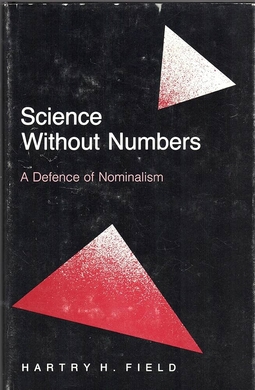
Numbers, basic numbers. Leaving out the idea of base 10 mathematics which is probably not universal but just basic numbers. Would this be a commonality with an intelligent alien civilization? You look out and you have the sun and eight planets. Do you think this is a basic commonality? I think it's tempting to imagine and a lot of people think it is. And there's a lot of good arguments that suggest that math is something fundamental to the universe, not something that's just a human mind conception. One argument is that math had lead to discoveries. If you look at how Maxwell put together the Maxwell's Equations of Electrodynamics, he noticed there was a lack of symmetry. He said this would be more beautiful, more mathematically symmetrical if there was another piece here. So in that case a search for mathematical simplicity and symmetry led him to discover something about the universe itself. Or think about abstract algebra. These are games mathematicians invented to play with patterns and have fun nerding out about patterns and numbers and they didn't care if it was relevant at all. They just liked patterns and numbers. 100 years after they invented it, particle physicists used that math to explain the relationship between all the particles. And it simplifies everything in this glorious way and shows us and led us to higgs boson. So that's math leading physics. That tells us there's something mathematical about the universe itself. I think that almost everyone that has studied physics has this moment when you see the beauty, the power of the mathematical expression of physics describe the universe so precisely. Like down to 10 decimal places you can predict magnetic dipole moments of these particles and get it right. That really strongly suggests that we're seeing the source code of the universe, not some description of it, some approximate. But you need to be skeptical of that becase that argument puts us at rhe centwr of rhe universe. It makes it sound like the way we think is the way the universe thinks. Thats a little too flattering not invite some skepticism. A lot of people argue that numbers can be very, very useful but they don't need to be necessary to understanding the universe. There's a book by Hartry Fields called Science Without Numbers. As an exercise, he developed a theory of gravity without any numbers. He said we don't need the number line, it's an abstraction that we created because we like to think that way. Think of comparisons: bigger, smaller, closer, further. Think about relationships. Everything on the number line doesn't have to have a value. He was able to construct a theory of physics without numbers and math and equations. It's ugly and not very useful and you wouldn't want to use it to do any calculations because it's very cumbersome. But proves an important point, that many elements of our science can be very handy and effective but they might not be necessary.
Chemists came up with their entire own system in chemistry of configurations of molecules and things like that. Mathematical in its way and involves math but it's a different expression in that sense. We'll credit Mendelv so it's between physics and chemistry.
 en.wikipedia.org
Mathematics functions like a language, but not in the same way poetry does. Translating a physical quantity—such as units of milk on a shelf—into mathematics is essentially lossless: there is a direct, unambiguous mapping between reality and its mathematical description. Translating a poem into another language, by contrast, is inherently ambiguous. Meaning, rhythm, tone, and cultural context cannot all be preserved at once, which is why there are many valid translations of a poem but only one correct count of milk.
Even a non-human intelligence would almost certainly still encounter countability. Unless such an intelligence were literally a single, indivisible entity, members of the species would be distinguishable from one another and therefore countable. Discreteness arises not from rocks, but from identity.
So while an alien intelligence might conceptualize the universe very differently from us, mathematics would remain a shared structure rather than a parochial human viewpoint. The gap between counting and poetry is not one of degree, but of kind.
Numbers, basic numbers. Leaving out the idea of base 10 mathematics which is probably not universal but just basic numbers. Would this be a commonality with an intelligent alien civilization? You look out and you have the sun and eight planets. Do you think this is a basic commonality? I think it's tempting to imagine and a lot of people think it is. And there's a lot of good arguments that suggest that math is something fundamental to the universe, not something that's just a human mind conception. One argument is that math had lead to discoveries. If you look at how Maxwell put together the Maxwell's Equations of Electrodynamics, he noticed there was a lack of symmetry. He said this would be more beautiful, more mathematically symmetrical if there was another piece here. So in that case a search for mathematical simplicity and symmetry led him to discover something about the universe itself. Or think about abstract algebra. These are games mathematicians invented to play with patterns and have fun nerding out about patterns and numbers and they didn't care if it was relevant at all. They just liked patterns and numbers. 100 years after they invented it, particle physicists used that math to explain the relationship between all the particles. And it simplifies everything in this glorious way and shows us and led us to higgs boson. So that's math leading physics. That tells us there's something mathematical about the universe itself. I think that almost everyone that has studied physics has this moment when you see the beauty, the power of the mathematical expression of physics describe the universe so precisely. Like down to 10 decimal places you can predict magnetic dipole moments of these particles and get it right. That really strongly suggests that we're seeing the source code of the universe, not some description of it, some approximate. But you need to be skeptical of that becase that argument puts us at rhe centwr of rhe universe. It makes it sound like the way we think is the way the universe thinks. Thats a little too flattering not invite some skepticism. A lot of people argue that numbers can be very, very useful but they don't need to be necessary to understanding the universe. There's a book by Hartry Fields called Science Without Numbers. As an exercise, he developed a theory of gravity without any numbers. He said we don't need the number line, it's an abstraction that we created because we like to think that way. Think of comparisons: bigger, smaller, closer, further. Think about relationships. Everything on the number line doesn't have to have a value. He was able to construct a theory of physics without numbers and math and equations. It's ugly and not very useful and you wouldn't want to use it to do any calculations because it's very cumbersome. But proves an important point, that many elements of our science can be very handy and effective but they might not be necessary.
Chemists came up with their entire own system in chemistry of configurations of molecules and things like that. Mathematical in its way and involves math but it's a different expression in that sense. We'll credit Mendelv so it's between physics and chemistry.


