• Hey Guest,

    We wanted to share a quick update with the community.

    Our public expense ledger is now live, allowing anyone to see how donations are used to support the ongoing operation of the site.

    👉 View the ledger here

    Over the past year, increased regulatory pressure in multiple regions like UK OFCOM and Australia's eSafety has led to higher operational costs, including infrastructure, security, and the need to work with more specialized service providers to keep the site online and stable.

    If you value the community and would like to help support its continued operation, donations are greatly appreciated. If you wish to donate via Bank Transfer or other options, please open a ticket.

    Donate via cryptocurrency:

    Bitcoin (BTC):
    Ethereum (ETH):
    Monero (XMR):
S

Skal

Member
Sep 22, 2022
63
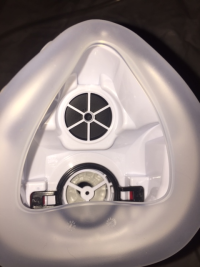
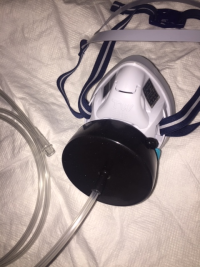
So I'm going to use a half-faced gas mask (shown below) to inhale inert gas while lying on the bed. The mask is connected to a 4mm inner diameter oxygen tube, which will be connected to a gas-regulator set for 25 LPM and 0.2Mpa. But since I'm unsure if the tube can handle 25 LPM, I came up with another plan.
Aa2 Aa

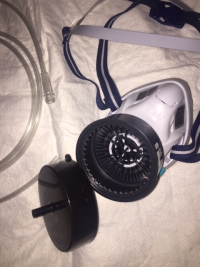
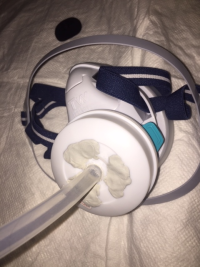
Here, I put a hole in a filter and ran a tube through it. This time the tube is a 10mm inner diameter, which should be more than enough to pass 25 LPM. These gray things are putty I used to seal the filter's air intakes. This solved the previous potential problem, but at the cost of reliability (like airtightness) since I made a lot of modifications.
1 2 3

Which do you think is better? Are there any issues with these setups?
I'm going to test both anyway, but I'd like to hear what others have to say about them. Thanks.
 
Last edited:
blacksand

blacksand

Specialist
May 2, 2023
380
What type of mask is it. I thought regular oxygen masks could not be used for ctb.
 
M

Msvr

Student
Sep 9, 2024
100
For a 4 mm smooth tube carrying 25 L/min, the friction loss works out to about 0.8 psi per metre of tube. That means even 10m of tube only requires 8 psi of force by the tank. In the US welding tanks are commonly 2200 psi. I think the psi might be different in other countries, but ofc significantly higher than 8 psi. So your 4mm tube works fine (search omnicalc Darcy Weisbach Calculator and calctool Darcy Friction Factor Calculator to run your own calculations)
But even still, just to test your regulator, if you want, an easy undeniable test is buy a 5 (18.9L) gallon jug. Fill it with water. Put your tube inside. Flip it upside down in a bath, the water will stay in the jug. Turn your tank to 25 lpm. 18.9L/25L is 0.756 x 60 seconds is ~45 seconds to evacuate the water from the jug.
 
  • Like
Reactions: Skal
S

Skal

Member
Sep 22, 2022
63
Is there a plan for venting the exhaled c02.
It works the same way as an oxygen mask. The gas constantly flushes out the exhaled CO2 through a venting hole (the black circular rubber in the last picture above).
On the other hand, when you inhale, the rubber shuts the venting hole, preventing outside air from entering the mask. Thus CO2 is expelled but air is never allowed in.

For a 4 mm smooth tube carrying 25 L/min, the friction loss works out to about 0.8 psi per metre of tube. That means even 10m of tube only requires 8 psi of force by the tank. In the US welding tanks are commonly 2200 psi. I think the psi might be different in other countries, but ofc significantly higher than 8 psi. So your 4mm tube works fine (search omnicalc Darcy Weisbach Calculator and calctool Darcy Friction Factor Calculator to run your own calculations)
But even still, just to test your regulator, if you want, an easy undeniable test is buy a 5 (18.9L) gallon jug. Fill it with water. Put your tube inside. Flip it upside down in a bath, the water will stay in the jug. Turn your tank to 25 lpm. 18.9L/25L is 0.756 x 60 seconds is ~45 seconds to evacuate the water from the jug.
Thanks for confirming that. Much appreciated.
I was worried because when I tried to inhale air from the tube, hardly any air came out and I nearly suffocated. This made me doubt whether the tube could pass 25l/min, the equivalent of relatively heavy breathing as per google. I guess the pressure from the tank/regulator is much greater than I thought.
 
N

NellyGoes

Sure.
Aug 16, 2025
166
It works the same way as an oxygen mask
Oxygen masks are strongly discouraged for this method as they are not designed for ctb and the chance of it failing is high. There was a post recently that outlined the failure with an oxygen mask idk if you can find it. But basically the bottom line is then when you lose consciousness the mask will shift on your face. And this will most likely cause too much oxygen to get in for ctb. And I think people have tried to counteract that with duct tape etc (in case that's your plan?), still failing (from what I recall). I'm not 100% sure if any cases with tape sealing were successful. Personally I wouldn't risk it.
However I'll say your mask looks more "serious" and almost closer to what a scuba mask looks like. So idk do you have credible sources that this mask you got will work if or ctb?

These gray things are putty I used to seal the filter's air intakes.
Have you tested this? (Idk how but how can you ensure no oxygen gets in with the putty).

10mm for the tube should be okay. I think most guides suggested 10-15mm.
 
S

Skal

Member
Sep 22, 2022
63
Oxygen masks are strongly discouraged for this method as they are not designed for ctb and the chance of it failing is high. There was a post recently that outlined the failure with an oxygen mask idk if you can find it. But basically the bottom line is then when you lose consciousness the mask will shift on your face. And this will most likely cause too much oxygen to get in for ctb. And I think people have tried to counteract that with duct tape etc (in case that's your plan?), still failing (from what I recall). I'm not 100% sure if any cases with tape sealing were successful. Personally I wouldn't risk it.
However I'll say your mask looks more "serious" and almost closer to what a scuba mask looks like. So idk do you have credible sources that this mask you got will work if or ctb?
Yes, that's why I switched from an oxygen mask to a gas mask. Gas masks are designed to protect the wearer from toxic gases/fumes in the air (much like scuba masks protect the diver from water), so they're much more airtight than oxygen masks. For this reason I think they're reliable for ctb (though I don't know anyone who has used one for that purpose.)

Have you tested this? (Idk how but how can you ensure no oxygen gets in with the putty).
I tried to inhale while wearing the mask and blocking the end of the tube with my finger, but I couldn't draw in any air at all. So I think the putty works fine.
 
Last edited:
N

NellyGoes

Sure.
Aug 16, 2025
166
Yes, that's why I switched from an oxygen mask to a gas mask. Gas masks are designed to protect the wearer from toxic gases/fumes in the air (much like scuba masks protect the diver from water), so they're much more airtight than oxygen masks. For this reason I think they're reliable for ctb (though I don't know anyone who has used one for that purpose.)


I tried to inhale while wearing the mask and blocking the end of the tube with my finger, but I couldn't draw in any air at all. So I think the putty works fine.

Hope it all works as intended!
 
  • Like
Reactions: Skal

Similar threads

S
Replies
2
Views
2K
Suicide Discussion
sucktobeagdguy
S
LostZombie
Replies
21
Views
4K
Suicide Discussion
Dontwant2Bhere
D
T
Replies
5
Views
2K
Suicide Discussion
k1w1
K
SomewhereAlongThe
Replies
34
Views
6K
Suicide Discussion
iminhell
I