• Hey Guest,

    We wanted to share a quick update with the community.

    Our public expense ledger is now live, allowing anyone to see how donations are used to support the ongoing operation of the site.

    👉 View the ledger here

    Over the past year, increased regulatory pressure in multiple regions like UK OFCOM and Australia's eSafety has led to higher operational costs, including infrastructure, security, and the need to work with more specialized service providers to keep the site online and stable.

    If you value the community and would like to help support its continued operation, donations are greatly appreciated. If you wish to donate via Bank Transfer or other options, please open a ticket.

    Donate via cryptocurrency:

    Bitcoin (BTC):
    Ethereum (ETH):
    Monero (XMR):
S

SoulWantsHome

Member
Aug 6, 2025
89
Hello, people. I'm new here.

I intend to commit suicide by the use of nitrogen-gas and an oxygen-mask (which has 2 valves at the top of the nose, for removing carbon-dioxide).

I bought the "Max Dog Nitrogen Kit" years ago (which is a kit that consists of a gas-regulator that is set at 15 litres per minute, and that has a connector that's specifically designed for oxygen-mask-tubes and similar tubes), as well as a few oxygen-masks of different sizes.

However, despite that the oxygen-mask will be sealed airtight with tape around my face; I'm still worried about the possibility of sucking oxygen into the oxygen-mask, through the valves, every time I inhale/breath in (as this closes the valves of the oxygen-mask - but at the same time, it might suck a tiny bit of oxygen into the oxygen-mask, right before the valves close).

And this worry of mine, is the primary reason why I recently made an account on this forum, as I fear using this suicide-method until I'm sure of how safe it is (in terms of achieving a successful suicide).


So, does anyone know if the amount of oxygen that is sucked into the oxygen-mask, through the valves, every time I inhale/breathe in; will be enough to keep my body alive during the suicide-attempt? (Which thereby would result in the suicide-attempt being unsuccessful, and me potentially ending up with brain-damage instead.)


Here's an example of what a typical oxygen-mask looks like (although the small, round plates that are supposed to sit on top of the 2 valves, are missing in these pictures):

And here's a picture and some information about the "Max Dog Nitrogen Kit":
 
Last edited:
_AllCatsAreGrey_

_AllCatsAreGrey_

An existence transfigured by failure.
Mar 4, 2024
812
I don't have much direct knowledge about this, but it makes me think of this podcast episode that Nitschke did reflecting on the nitrogen execution that was done in the US last year that was described by some as a botched execution.


I feel it may overlap to your question as they used a mask to apply the inert gas - although

I hope you're able to find clear answers to address your method concerns.

Re the valves, I would imagine that they work to release gas, but not take in any. But I'm not sure about that
 
Last edited:
locked*n*loaded

locked*n*loaded

Archangel
Apr 15, 2022
9,598
The pressure from the nitrogen in the mask should keep oxygen from entering when the valves are open for that split second to allow CO2 to exit.
 
  • Informative
Reactions: _AllCatsAreGrey_
S

SoulWantsHome

Member
Aug 6, 2025
89
I don't have much direct knowledge about this, but it makes me think of this podcast episode that Nitschke did reflecting on the nitrogen execution that was done in the US last year that was described by some as a botched execution.


I feel it may overlap to your question as they used a mask to apply the inert gas - although

I hope you're able to find clear answers to address your method concerns.

Re the valves, I would imagine that they work to release gas, but not take in any. But I'm not sure about that
Yeah, I've heard about that incident with Kenny Smith. And thanks for the link, it was an interesting listen.

But the problem that occurred in that incident with Kenny Smith, obviously wasn't the fact that they used a face-mask to cause nitrogen-hypoxia. Instead, the problem that occurred in that incident, must have been that they used the wrong type of face-mask; or that the face-mask they used, wasn't doing its job effectively; or that the flow of nitrogen-gas was set too low. Those things result in the carbon-dioxide not being effectively removed from the face-mask, and/or that the person isn't receiving enough air. And both of those resulting things, can, respectively, make the killing-attempt via hypoxia, uncomfortable and/or painful for the person.

And also, as was mentioned in this podcast-episode; Kenny Smith didn't want to die. And therefore, he probably held his breath for as long as possible, in an attempt to prolong his life for as long as possible, when the oxygen-supply was about to be switched off; which thereby would have resulted in the whole process taking much longer for him, than it normally would have taken.


If a person is wearing a face-mask that's completely sealed/airtight, and that also effectively removes all the exhaled carbon-dioxide, while at the same time effectively supplies sufficient amounts of nitrogen-gas or helium-gas; then the face-mask is foolproof, and is extremely effective. And a quick and painless death of the person, is then guaranteed (if the person truly wants to die, and thereby inhales/breaths in the nitrogen-gas or helium-gas, correctly).

And the best types of face-masks to use for this (for private suicides/do-it-yourself-suicides - as opposed to institutionalized, assisted suicides), are full-faced diving-masks - as diving-masks need to be able to perform these things 100% perfectly, deep under water (although they supply oxygen-gas instead of nitrogen-gas or helium-gas, in that context, of course); and full-faced diving masks, don't require the person to have a breathing-piece in the mouth, like normal diving-masks do.

However, full-faced diving-masks, along with its connections to the regulator/gas-tank, are very expensive. And oxygen-masks are both the closest and cheapest alternative to them, that I've found.


PS:

Using an "exit-bag" to commit suicide via hypoxia, seems like a really bad idea, in comparison to using an oxygen-mask to commit suicide via hypoxia. This is because there seems to be a lot more that can go wrong, when constructing and/or using an "exit-bag" to commit suicide via hypoxia, than when using an oxygen-mask to commit suicide via hypoxia.

I've never liked the idea of constructing and/or using an "exit-bag" to commit suicide via hypoxia - due to how many things that can go wrong with that method, and how dangerous it thereby can be.


The pressure from the nitrogen in the mask should keep oxygen from entering when the valves are open for that split second to allow CO2 to exit.
No - because when you inhale/breath in (when having the face-mask on); the suction that is created, first has to go through the outside-air, before it reaches the flexible plates of the valves (which are located on the outside of the face-mask). And this thereby means that a tiny amount of the outside-air, will be sucked into the face-mask, a brief moment right before the flexible plates of the valves close.
 
Last edited:
  • Like
Reactions: _AllCatsAreGrey_
locked*n*loaded

locked*n*loaded

Archangel
Apr 15, 2022
9,598
No - because when you inhale/breath in (when having the face-mask on); the suction that is created, first has to go through the outside-air, before it reaches the flexible plates of the valves (which are located on the outside of the face-mask). And this thereby means that a tiny amount of the outside-air, will be sucked into the face-mask, a brief moment right before the flexible plates of the valves close.
Inhaling shouldn't open the valves at all. Why would it? They're CO2 release valves, which opens them by exhaling, and when they do open, the mask is already pressurized by the nitrogen, which will keep any air from the outside from entering while the valves are open. Others have used this type of mask without issue.
 
SadCryingBunny

SadCryingBunny

Experienced
Apr 10, 2025
283
Yeah, I've heard about that incident with Kenny Smith. And thanks for the link, it was an interesting listen.

But the problem that occurred in that incident with Kenny Smith, obviously wasn't the fact that they used a face-mask to cause nitrogen-hypoxia. Instead, the problem that occurred in that incident, must have been that they used the wrong type of face-mask; or that the face-mask they used, wasn't doing its job effectively; or that the flow of nitrogen-gas was set too low. Those things result in the carbon-dioxide not being effectively removed from the face-mask, and/or that the person isn't receiving enough air to the lungs. And both of those resulting things, can make the killing-attempt via hypoxia, uncomfortable and/or painful for the person.

And also, as was mentioned in this podcast-episode; Kenny Smith didn't want to die. And therefore, he probably held his breath for as long as possible, in an attempt to prolong his life for as long as possible, when the oxygen-supply was about to be switched off; which thereby would have resulted in the whole process taking much longer for him, than it normally would have taken.


If a person is wearing a face-mask that's completely sealed/airtight, and that also effectively removes all the exhaled carbon-dioxide, while at the same time effectively supplies sufficient amounts of nitrogen-gas or helium-gas; then the face-mask is foolproof, and is extremely effective. And a quick and painless death of the person, is then guaranteed (if the person truly wants to die, and thereby inhales/breaths in the nitrogen-gas or helium-gas, correctly).

And the best types of face-masks to use for this (for private suicides/do-it-yourself-suicides - as opposed to institutionalized, assisted suicides), are full-faced diving-masks - as diving-masks need to be able to perform these things 100% perfectly, deep under water (although they supply oxygen-gas instead of nitrogen-gas or helium-gas, in that context, of course); and full-faced diving masks, don't require the person to have a breathing-piece in the mouth, like normal diving-masks do.

However, full-faced diving-masks, along with its connections to the regulator/gas-tank, are very expensive. And oxygen-masks are both the closest and cheapest alternative to them, that I've found.


PS:

Using an "exit-bag" to commit suicide via hypoxia, seems like a really bad idea, in comparison to using an oxygen-mask to commit suicide via hypoxia. This is because there seems to be a lot more that can go wrong, when constructing and/or using an "exit-bag" to commit suicide via hypoxia, than when using an oxygen-mask to commit suicide via hypoxia.

I've never liked the idea of constructing and/or using an "exit-bag" to commit suicide via hypoxia - due to how many things that can go wrong with that method, and how dangerous it thereby can be.


No - because when you inhale/breath in (when having the face-mask on); the suction that is created, first has to go through the outside-air, before it reaches the flexible plates of the valves (which are located on the outside of the face-mask). And this thereby means that a tiny amount of the outside-air, will be sucked into the face-mask, a brief moment right before the flexible plates of the valves close.
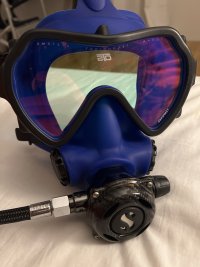
With a full face scuba mask, there is 0% outside air entering through because these are designed to work underwater. OTS Spectrum mask connected to Scubapro A700 regulator through mouthpiece with regulator free flowing at 50L per minute will allow 0% air from the outside in. When mask is full and flowing in, the extra gas will leak from the face skirts or exhaust valve. That means the valve will be constantly exhausting co2 breath build up along with the extra nitrogen/helium gas, chance of oxygen getting through the exhaust valve when it's open due to the constant leak is almost impossible due to the high pressure flow rate from 50L a minute.
 
S

SoulWantsHome

Member
Aug 6, 2025
89
Inhaling shouldn't open the valves at all. Why would it?
Inhaling/breathing in doesn't open the valves of the face-mask. You simply misunderstood what I was saying.


They're CO2 release valves, which opens them by exhaling (...)
Correct.


(...) and when they do open, the mask is already pressurized by the nitrogen, which will keep any air from the outside from entering while the valves are open.
That's the kind of thing that sounds good on the surface - but is actually incorrect when you stop and think about it.

The concept you're suggesting here, is simply physically impossible - when inhaling/breathing in, while wearing an oxygen-mask. And that's what I tried to explain to you, in my previous post above.

The suction that's created by inhaling/breathing in, which closes the valve-plates on the oxygen-mask; also sucks a tiny bit of outside-air into the oxygen-mask in the process. Otherwise, the suction simply wouldn't have been able to reach and close the valve-plates on the oxygen-mask.

You see, the valve-plates on an oxygen-mask closes precisely because the air beneath them is removed (by inhaling/breathing in), which creates a vacuum, which thereby pulls the valve-plates close. And in that process, the outside-air is obviously sucked into the oxygen-mask - because it's precisely that removal of the outside-air (located in the tiny space that exists between the mask's surface and the valve-plates), that actually sucks the valve-plates close.


Others have used this type of mask without issue.
If they have done so - and successfully died from it; then it still doesn't prove the concept you're suggesting. It actually just proves that the tiny amount of outside-air that's sucked into the oxygen-mask, during the closing of the valve-plates, isn't enough to cause any problems for the hypoxia to occur.

So, my question to you is:
Did they use an oxygen-mask for hypoxia, and managed to successfully die from it? (As opposed to just briefly testing the method, without actually dying from it?)


With a full face scuba mask, there is 0% outside air entering through because these are designed to work underwater. OTS Spectrum mask connected to Scubapro A700 regulator through mouthpiece with regulator free flowing at 50L per minute will allow 0% air from the outside in. When mask is full and flowing in, the extra gas will leak from the face skirts or exhaust valve. That means the valve will be constantly exhausting co2 breath build up along with the extra nitrogen/helium gas, chance of oxygen getting through the exhaust valve when it's open due to the constant leak is almost impossible due to the high pressure flow rate from 50L a minute.
Exactly! Those are the reasons I'd prefer using a diving-mask for suicide by hypoxia, if it wasn't so damn expensive. So, thanks for confirming these things.
 
Last edited:
N

nothing-new

Member
Aug 16, 2025
7
With a full face scuba mask, there is 0% outside air entering through because these are designed to work underwater. OTS Spectrum mask connected to Scubapro A700 regulator through mouthpiece with regulator free flowing at 50L per minute will allow 0% air from the outside in. When mask is full and flowing in, the extra gas will leak from the face skirts or exhaust valve. That means the valve will be constantly exhausting co2 breath build up along with the extra nitrogen/helium gas, chance of oxygen getting through the exhaust valve when it's open due to the constant leak is almost impossible due to the high pressure flow rate from 50L a minute.
can anyone corroborate this or are we all just theorizing at each other with no real concrete evidence?
 
SadCryingBunny

SadCryingBunny

Experienced
Apr 10, 2025
283
can anyone corroborate this or are we all just theorizing at each other with no real concrete evidence?
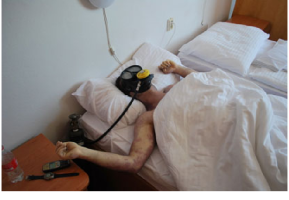
I have my mask setup with my regulator in front of me. I just received it 2 days ago. I tested it with about 50L of freeflow using normal air scuba gas and it was too much, it was filling my lungs like a balloon ready to pop rapidly and I couldn't breath properly. I expect a 20L give or take free flow with this mask to be the maximum someone can handle. 20L free flow will give about 30 minutes of constant gas flow using a 3L tank at 200bar gas pressure. Plenty of time to ctb. Take sleeping pills at night, then have a nice drink & meal, put on nice nature sounds like rain and go to sleep. You'll be unconscious in a few minutes and dead in less than 10 minutes. The guy who died using the scuba method in the hotel (I will attach his pictures) used a 3L and still had half the gas volume 100 bar left when he was discovered deceased however he didn't have the regulator tuned to free flow. I recommend to tune it to free flow for additional peace of mind guarantee that when you fall unconscious and your suction is low due to small unconscious breaths, you can still have nitrogen filling your lungs. I recommend a 5L tank for ultimate peace of mind for almost a hour of gas flow or if you want to use a higher flow rate to maintain the same 30 minute free flow guarantee. Secondly I ran into a very very serious problem, the mask is very uncomfortable with the mouthpiece placed in, it makes the mask heavy causing discomfort in my nose and weight on my face unless I completely lie down looking up at the roof with a pillow and even then it's still not comfortable. I will need to remove the regulator from the mouthpiece and run a hose through the mouthpiece and block the remainder of the opening space to make the mask light and more comfortable on my face/nose when lying down and looking straight up. Without the regulator, the mask is very light almost feels like I'm not wearing anything. Finally, the standard OTS (Ocean Technology System) rubber straps that come with the mask are very VERY uncomfortable. They cause the mask to dig into my face and the hard thick rubber straps are not comfortable against my skin and back of the head. When you're dying, it's a very scary process already and I want to be relaxed as possible. When I die, I don't want a face mask tight and uncomfortable to be on my face for the next few months until I'm discovered constantly digging into my skin. You may say "you're dead", well I'm scared and I just want my body to be as comfortable as possible as if I was still alive and could feel my skin. So I've theorised making a mask strap using these rubber straps in the link below on Ebay to make the mask straps stretchy and comfortable. The mask doesn't need to be tight on the face, just enough to make a suction. With the normal thick silicone rubber stock straps that come with the mask, they're not stretchy, are thick and bulky. When you fall unconscious, with the stretchy straps, the mask should fall off your face eventually or remain very lightly pressed on your face very comfortably. You can adjust the stretch. This is the ULTIMATE PAINLESS PEACEFUL METHOD.
 

Attachments

  • image.jpg
    image.jpg
    1.6 MB · Views: 0
  • IMG_7058.png
    IMG_7058.png
    174.4 KB · Views: 0
S

SoulWantsHome

Member
Aug 6, 2025
89
Update:

I want to warn people about using an oxygen-mask to achieve hypoxia via gas-inhalation.

I thought that an oxygen-mask would work fine, if it has the proper size for a person's face, and if it's been taped properly (with an incredibly strong type of tape) onto a person's face and head, so that it thereby would be completely sealed/airtight.

But after having tried taping an oxygen-mask onto my face in order to achieve this, I realized that it was much more difficult than I had imagined, to both:
- Get a proper seal around the entire edge of the oxygen-mask.
- Make the tape lie flat/not bulky on the face and mask (and thereby prevent any possibility of outside air entering the oxygen-mask).
- Get the tape to stick properly to the face (which is especially important if involuntary compulsions occur when the body is dying, while the person is unconscious).

Due to the difficulties with achieving all of these things, an oxygen-mask is therefore a highly unreliable type of face-mask to use for achieving hypoxia via gas-inhalation – even if you try to ensure a proper seal by taping the oxygen-mask (with an incredibly strong type of tape) onto your face and head.

(By the way, I had actually planned to commit suicide around this weekend, as I mentioned in another thread on this forum. But due to these problems with the oxygen-mask, as well as bad timing in regard to other things going on in my life; I had to postpone it.)


The best type of face-mask to use for achieving hypoxia via gas-inhalation, is simply a full-faced scuba-diving-mask. The only downside with that, however, is that a full-faced scuba-diving-mask is very expensive (especially if you want the best version of it – which is what anyone would want, due to its increased effectiveness and comfort).

A full-faced scuba-diving-mask has all the features you need in order to reliably, quickly, painlessly and successfully achieve hypoxia via gas-inhalation. It's simply the best way to achieve hypoxia via gas-inhalation, in the context of a do-it-yourself-situation (as opposed to in the context of an ideal, institutionalized assisted-suicide-situation; where people would have been equipped with face-masks that are specifically designed for achieving hypoxia via gas-inhalation).


However, due to how expensive a full-faced scuba-diving-mask is (especially the best version of it), I probably won't be able to afford it myself at the moment – which is why I'll probably resort to hanging as my personal choice of suicide-method (as hanging, or jumping from a 60+ meter height, have always been my plan B, if hypoxia via gas-inhalation would become unavailable to me).

Hanging truly is the best suicide-method (when executed correctly) for anyone who needs a simple, readily available, relatively quick and relatively painless suicide-method. (And you'll see why this is, if you watch some good videos of suicide by hanging, where the hanging has been executed correctly. And this is also supported by other sources regarding hanging - including some of the survivors of hanging-attempts.)

However, hypoxia via gas-inhalation, by the use of a full-faced scuba-diving-mask, truly is the best suicide-method (when executed correctly) for anyone who has a lot of money, and who has a lot of time to buy equipment, and who wants to be 100% ensured a quick and painless suicide-method.

This is true even in comparison to doctor-prescribed drugs that are often used in assisted-suicide-clinics – as hypoxia via gas-inhalation is an even safer/even more reliable suicide-method for ensuring a 100% painless suicide, than such drugs are (which is because the anaesthesia, which is a part of those drugs, isn't always reliable – even though it looks reliable from the outside; which is proven for example by the fact that some people are conscious during surgery, despite seeming to be unconscious from the outside, after having received anaesthesia).


In short:
Hypoxia via gas-inhalation, by the use of a full-faced scuba-diving-mask, truly is the gold-standard of suicide-methods (when executed correctly). And hanging truly is the silver-standard of suicide-methods (when executed correctly).
 
Last edited:
S

Skal

Member
Sep 22, 2022
63
you don't necessarily need an expensive full faced mask, half faced gas masks are cheaper and equally reliable (they're designed to prevent gas from entering the mask, which means it also prevents gas from leaking out of it)
 
Last edited:
Intoxicated

Intoxicated

MIA Man
Nov 16, 2023
1,198
However, due to how expensive a full-faced scuba-diving-mask is (especially the best version of it), I probably won't be able to afford it myself at the moment – which is why I'll probably resort to hanging as my personal choice of suicide-method (as hanging, or jumping from a 60+ meter height, have always been my plan B, if hypoxia via gas-inhalation would become unavailable to me).
Hanging and gas asphyxiation are not mutually exclusive. When they're combined, you can lose consciousness faster than with hanging alone. The best results can be achieved if inert gas is replaced with nitrous oxide which has analgesic and anxiolytic effects (xenon is the only inert gas with similar effects that I know, but it's very expensive). One of the best ways to achieve good analgesia with it is to inhale it together with oxygen at proportion 80/20 for 2 - 4 minutes.

Personally, I find asphyxiation by nitrous good on its own. I've tried to fill a large trash bag with this gas and put my head there after full exhale. When I felt impending loss of consciousness, I removed my head from there (I attached the bag over the bed, so the head would fall out of it due to gravity force anyway) and fainted a few seconds later. It took less than half a minute to pass out from breathing the gas. I have no doubts that I could die easily if I left my head inside the bag after securing it tightly around the neck. In experiments with air, I've got a somewhat significant CO2 buildup only after 3 minutes of breathing inside the bag. If ~20 seconds of breathing nitrous were enough to just make me unconscious, 3 minutes should suffice for putting me in deep coma (it's unlikely that hypercapnic response could be a trouble in this state). The whole test setup consisting of cream dispenser, culinary 8g chargers, pack of trash bags, latex balloons (which I also used in some tests), PVC tape, and a small medical canister with 90% O2 / 10% N2 mixture (for testing the analgesic action without fainting) was purchased for about $60, that is relatively cheap, I think.
 
Last edited:
S

SoulWantsHome

Member
Aug 6, 2025
89
you don't necessarily need an expensive full faced mask, half faced gas masks are cheaper and equally reliable (they're designed to prevent gas from entering the mask, which means it also prevents gas from leaking out of it)
If you're talking about half-faced gas-masks that aren't scuba-diving-masks (such as "emergency escape breathing devices"), they're more unreliable in terms of removing CO2, as some of them rely on the same principle as the "exit-bag" for that; and some of them possibly require the compressor/machine that they often come bundled with (which provides oxygen to the mask), in order to remove the CO2 from the mask.

And in addition to that; it can be difficult to find the proper adaptors to connect such masks to the gas-regulator or the gas-tank of choice (which means that it's a lot more unnecessary work/hassle to use such masks, in comparison to using scuba-diving-masks, for achieving hypoxia via gas-inhalation).


But if you're talking about half-faced gas-masks that are scuba-diving-masks, they require a mouth-piece to breath through, and are less comfortable to wear - and they're also a bit less effective at providing gas, as well as removing CO2, in comparison to the very best (and the most expensive) full-faced scuba-diving-masks.

Besides, half-faced scuba-diving-masks, as well as their necessary accessories, are still very expensive. So, if a person can afford a half-faced scuba-diving-mask and its necessary accessories, then that person can probably also afford a full-faced scuba-diving-mask. And a full-faced scuba-diving mask has the necessary accessories (besides the hose) integrated into the mask, which thereby requires less work in terms of setup/preparation before use - which is 1 of the reasons why a full-faced scuba-diving-mask is the ideal choice.


Hanging and gas asphyxiation are not mutually exclusive. When they're combined, you can lose consciousness faster than with hanging alone. The best results can be achieved if inert gas is replaced with nitrous oxide which has analgesic and anxiolytic effects (xenon is the only inert gas with similar effects that I know, but it's very expensive). One of the best ways to achieve good analgesia with it is to inhale it together with oxygen at proportion 80/20 for 2 - 4 minutes.

Personally, I find asphyxiation by nitrous good on its own. I've tried to fill a large trash bag with this gas and put my head there after full exhale. When I felt impending loss of consciousness, I removed my head from there (I attached the bag over the bed, so the head would fall out of it due to gravity force anyway) and fainted a few seconds later. It took less than half a minute to pass out from breathing the gas. I have no doubts that I could die easily if I left my head inside the bag after securing it tightly around the neck. In experiments with air, I've got a somewhat significant CO2 buildup only after 3 minutes of breathing inside the bag. If ~20 seconds of breathing nitrous were enough to just make me unconscious, 3 minutes should suffice for putting me in deep coma (it's unlikely that hypercapnic response could be a trouble in this state). The whole test setup consisting of cream dispenser, culinary 8g chargers, pack of trash bags, latex balloons (which I also used in some tests), PVC tape, and a small medical canister with 90% O2 / 10% N2 mixture (for testing the analgesic action without fainting) was purchased for about $60, that is relatively cheap, I think.
Hanging leads to unconsciousness relatively quickly when it's executed correctly.

Therefore, there's not much to be gained from overcomplicating the hanging-procedure, by adding the nitrous-oxide-method you're referring to here, into the hanging-procedure. And therefore, the simplicity of only using hanging as a suicide-method, would obviously be preferred - instead of adding other elements into the procedure, that just overcomplicate things without providing any significant benefits.


As for only using the nitrous-oxide-method itself as a suicide-method; it's good to know that this nitrous-oxide-method also exist, and that it also can be used for a quick and painless suicide. So, thanks for adding this option for anyone who might be interested in it.

By the way, did you experience any negative after-effects, after being temporarily unconscious from inhaling the nitrous oxide?
 
Last edited:
Intoxicated

Intoxicated

MIA Man
Nov 16, 2023
1,198
Hanging leads to unconsciousness relatively quickly when it's executed correctly.
Do you think that just following some correct procedure will guarantee quick loss of consciousness from hanging, and you don't need some luck (perhaps, optimal location and properties of your arteries and surrounding tissues in the neck) for this?
Therefore, there's not much to be gained from overcomplicating the hanging-procedure, by adding the nitrous-oxide-method you're referring to here, into the hanging-procedure. And therefore, the simplicity of only using hanging as a suicide-method, would obviously be preferred - instead of adding other elements into the procedure, that just overcomplicate things without providing any significant benefits.
From my perspective, there is nothing complicated in filling a latex balloon with gases and then inhaling from the balloon. This shouldn't be any more difficult than making a proper noose and placing it at the right spot. Maybe a few seconds of painful pressure on the neck is OK for you, but I'm pretty sure that some people would rather prefer to alleviate this discomfort regardless of its presumably short duration. I can tell this because the idea of hanging under influence of gas asphyxiation was brought up by various forum users before.
By the way, did you experience any negative after-effects, after being temporarily unconscious from inhaling the nitrous oxide?
The only noticeable after-effect was lifted mood for several hours, that is a kinda positive thing. But I remember that one user of this forum reported nausea about half an hour after several inhalations of nitrous. Such a reaction seems quite uncommon though.
 
S

SoulWantsHome

Member
Aug 6, 2025
89
Do you think that just following some correct procedure will guarantee quick loss of consciousness from hanging, and you don't need some luck (perhaps, optimal location and properties of your arteries and surrounding tissues in the neck) for this?
Yes. It's simple biology - and the vast majority of people (excluding rare exceptions) are biologically constructed in the exact same way (including regarding the properties of the arteries and the surrounding tissues in the neck).

So, if a normal person (with the potential exception of a very fat person, that has a very fat neck) executes hanging correctly (which, among other things, includes using the right type of rope, and doing it in a good location), then he/she will lose consciousness relatively quickly - and the death will thereby be completely painless, aside from the initial seconds before the person loses consciousness.

But a lot of hanging-attempts fail at these things - not because hanging is a "bad" suicide-method, but because the hanging is being executed incorrectly, and/or is being aborted before the person loses consciousness.


From my perspective, there is nothing complicated in filling a latex balloon with gases and then inhaling from the balloon. This shouldn't be any more difficult than making a proper noose and placing it at the right spot.
It may not be highly complicated - but it's still more "complicated" than just doing the hanging by itself.

But the main thing I was referring to, regarding the "overcomplication" of adding nitrous oxide to the hanging-procedure; was the concept of mixing nitrous oxide with oxygen at the correct proportion (80/20), for 2-4 minutes, like you mentioned. It may still not be highly complicated - but it's still more "complicated" than just doing the hanging by itself.


Maybe a few seconds of painful pressure on the neck is OK for you, but I'm pretty sure that some people would rather prefer to alleviate this discomfort regardless of its presumably short duration. I can tell this because the idea of hanging under influence of gas asphyxiation was brought up by various forum users before.
Sure, some people would probably prefer that - which is completely understandable, of course. (And I myself would have preferred it too, of course - if it didn't create this "unnecessary", added step to the hanging-method.)

However, the pain one would feel before losing consciousness during hanging (if the hanging is executed correctly), would only last for a relatively short amount of time - and it would be more of a straining, pressurized, tickling and pinching sensation, as opposed to extreme pain. And most people will be able to handle that - and will therefore probably prefer enduring that for a short while, for the sake of keeping the simplicity of the hanging-method.


The only noticeable after-effect was lifted mood for several hours, that is a kinda positive thing. But I remember that one user of this forum reported nausea about half an hour after several inhalations of nitrous. Such a reaction seems quite uncommon though.
Okay, that's good to know. Then it doesn't sound like there are any severe, permanent after-effects, if a person just wants to test out the nitrous-oxide-method, before deciding to truly commit suicide with it.
 
Last edited:
S

Skal

Member
Sep 22, 2022
63
If you're talking about half-faced gas-masks that aren't scuba-diving-masks (such as "emergency escape breathing devices"), they're more unreliable in terms of removing CO2, as some of them rely on the same principle as the "exit-bag" for that; and some of them possibly require the compressor/machine that they often come bundled with (which provides oxygen to the mask), in order to remove the CO2 from the mask.

And in addition to that; it can be difficult to find the proper adaptors to connect such masks to the gas-regulator or the gas-tank of choice (which means that it's a lot more unnecessary work/hassle to use such masks, in comparison to using scuba-diving-masks, for achieving hypoxia via gas-inhalation).
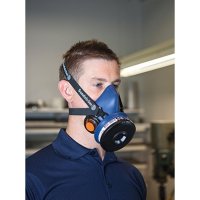
no i meant this type of gas mask. there's no hassle because you can easily connect tubes to the mask using fit-testing adapters (second image)


I 168700 APx ProdMedium 720894 10 OHD9513 0113F 2 Ohd safety
 
Last edited:
S

SoulWantsHome

Member
Aug 6, 2025
89
no i meant this type of gas mask. there's no hassle because you can easily connect tubes to the mask using fit-testing adapters (second image)


View attachment 179271View attachment 179272View attachment 179276
Awesome! Thanks for the tip.

I've often thought about using that type of gas-mask, but I wasn't sure if it could be connected to a gas-tank - as I've never seen this type of gas-mask connected to a gas-tank before. Therefore, I assumed that this type of gas-mask only worked by filtering the outside air - and that it would be impossible to use this type of gas-mask in a closed system, where it's connected to a gas-tank.
 
Last edited:
  • Like
Reactions: Skal
S

Skal

Member
Sep 22, 2022
63
Awesome! Thanks for the tip.

I've often thought about using that type of gas-mask, but I wasn't sure if it could be connected to a gas-tank - as I've never seen this type of gas-mask connected to a gas-tank before. Therefore, I assumed that this type of gas-mask only worked by filtering the outside air - and that it would be impossible to use this type of gas-mask in a closed system, where it's connected to a gas-tank.
this is my setup btw. it costs about $25. the tube I use is an ordinary 4mm ID oxygen tube, though i'm worried that it can't pass 15~25L/min reliably because it looks too narrow.

Aa2 Aa
 
S

SoulWantsHome

Member
Aug 6, 2025
89
this is my setup btw. it costs about $25. the tube I use is an ordinary 4mm ID oxygen tube, though i'm worried that it can't pass 15~25L/min reliably because it looks too narrow.

View attachment 179334View attachment 179335
Great! Thanks for the pictures. It looks like a good setup.


the tube I use is an ordinary 4mm ID oxygen tube, though i'm worried that it can't pass 15~25L/min reliably because it looks too narrow.
I'm not sure either, of what the maximum flow-rate is for ordinary oxygen-tubes. But I remember a user in some other thread on this forum, had found some information about it, which stated that an ordinary oxygen-tube allowed for the flow-rate of 15-25 litres per minute, if I remember correctly. (I don't remember which thread this was mentioned in though.)

Anyway, this is 1 of the reasons why a scuba-diving-mask still is the best/most secure way to achieve hypoxia via gas-inhalation (for people who both have the time and money to acquire a scuba-diving-setup), as the hoses for scuba-diving-masks are bigger than ordinary oxygen-hoses - and the person thereby won't have to worry about the hose potentially limiting the required flow-rate of the gas.
 
  • Like
Reactions: Skal
S

Skal

Member
Sep 22, 2022
63
I'm not sure either, of what the maximum flow-rate is for ordinary oxygen-tubes. But I remember a user in some other thread on this forum, had found some information about it, which stated that an ordinary oxygen-tube allowed for the flow-rate of 15-25 litres per minute, if I remember correctly. (I don't remember which thread this was mentioned in though.)

Anyway, this is 1 of the reasons why a scuba-diving-mask still is the best/most secure way to achieve hypoxia via gas-inhalation (for people who both have the time and money to acquire a scuba-diving-setup), as the hoses for scuba-diving-masks are bigger than ordinary oxygen-hoses - and the person thereby won't have to worry about the hose potentially limiting the required flow-rate of the gas.
Thanks for the info. I'm relieved to hear that.
I wish I could buy a scuba mask though
 
S

SoulWantsHome

Member
Aug 6, 2025
89
Thanks for the info. I'm relieved to hear that.
Take it with a grain of salt though, as I don't remember precisely what the person said + it's only second-hand-information (as opposed to being able to refer you to the official specifications for ordinary oxygen-tubes, that actually state what their maximum flow-rate is).


I wish I could buy a scuba mask though
Yeah, me too... Sigh...
 
Last edited:
  • Like
Reactions: Skal
S

SoulWantsHome

Member
Aug 6, 2025
89
the tube I use is an ordinary 4mm ID oxygen tube, though i'm worried that it can't pass 15~25L/min reliably because it looks too narrow.
Check out the short video of this oxygen-tube (which seems to be a standard oxygen-tube, similar to the one you already have):

The video is located among the product-images, and it shows gas flowing out of the oxygen-tube at a high flow-rate. I don't know how many litres per minute this particular flow-rate would be the equivalent of, but this oxygen-tube can obviously handle flow-rates that are a bit higher than what would be comfortable to be exposed to/to breath in (as the high flow-rate that's shown in the video, would obviously feel a bit uncomfortable being exposed to/breathing in). And therefore, a standard oxygen-tube (which this oxygen-tube seems to be) should be able to handle flow-rates that are high enough for our purposes.
 
S

Skal

Member
Sep 22, 2022
63
Check out the short video of this oxygen-tube (which seems to be a standard oxygen-tube, similar to the one you already have):

The video is located among the product-images, and it shows gas flowing out of the oxygen-tube at a high flow-rate. I don't know how many litres per minute this particular flow-rate would be the equivalent of, but this oxygen-tube can obviously handle flow-rates that are a bit higher than what would be comfortable to be exposed to/to breath in (as the high flow-rate that's shown in the video, would obviously feel a bit uncomfortable being exposed to/breathing in). And therefore, a standard oxygen-tube (which this oxygen-tube seems to be) should be able to handle flow-rates that are high enough for our purposes.

Thanks for the info.
I did a bit of exmeriment recently and it turned out just as we expected. Basically I ran 25L/min directly from the regulator outlet without a tube, then ran it through a tube, to see how much the flow would drop, but I couldn't feel any difference. So yes, the 4mm oxygen tube works fine (though 25L/min didn't feel like that strong a flow to me). Another thing i noticed is that running gas from the tube is relatively loud, but wearing the mask makes it perfectly silent. I live with my parents so this really helps.
 
Last edited:
S

SoulWantsHome

Member
Aug 6, 2025
89
I did a bit of exmeriment recently and it turned out just as we expected. Basically I ran 25L/min directly from the regulator outlet without a tube, then ran it through a tube, to see how much the flow would drop, but I couldn't feel any difference. So yes, the 4mm oxygen tube works fine (though 25L/min didn't feel like that strong a flow to me). Another thing i noticed is that running gas from the tube is relatively loud, but wearing the mask makes it perfectly silent. I live with my parents so this really helps.
Great! Thanks for doing that experiment, as it helps reassure us about the use of a standard oxygen-tube (both regarding flow-rate and noise-level).
 
U

unique_user

Member
Jan 9, 2025
29
i tried oxygen non rebreather mask but mine is not as good as urs but i would highly advice against using just the mask. for me mask+bag seemed better in my trials. checkout my trial and setup here
 
H

HNR17114168

Member
Feb 12, 2024
51
Yeah, I've heard about that incident with Kenny Smith. And thanks for the link, it was an interesting listen.

But the problem that occurred in that incident with Kenny Smith, obviously wasn't the fact that they used a face-mask to cause nitrogen-hypoxia. Instead, the problem that occurred in that incident, must have been that they used the wrong type of face-mask; or that the face-mask they used, wasn't doing its job effectively; or that the flow of nitrogen-gas was set too low. Those things result in the carbon-dioxide not being effectively removed from the face-mask, and/or that the person isn't receiving enough air. And both of those resulting things, can, respectively, make the killing-attempt via hypoxia, uncomfortable and/or painful for the person.

And also, as was mentioned in this podcast-episode; Kenny Smith didn't want to die. And therefore, he probably held his breath for as long as possible, in an attempt to prolong his life for as long as possible, when the oxygen-supply was about to be switched off; which thereby would have resulted in the whole process taking much longer for him, than it normally would have taken.


If a person is wearing a face-mask that's completely sealed/airtight, and that also effectively removes all the exhaled carbon-dioxide, while at the same time effectively supplies sufficient amounts of nitrogen-gas or helium-gas; then the face-mask is foolproof, and is extremely effective. And a quick and painless death of the person, is then guaranteed (if the person truly wants to die, and thereby inhales/breaths in the nitrogen-gas or helium-gas, correctly).

And the best types of face-masks to use for this (for private suicides/do-it-yourself-suicides - as opposed to institutionalized, assisted suicides), are full-faced diving-masks - as diving-masks need to be able to perform these things 100% perfectly, deep under water (although they supply oxygen-gas instead of nitrogen-gas or helium-gas, in that context, of course); and full-faced diving masks, don't require the person to have a breathing-piece in the mouth, like normal diving-masks do.

However, full-faced diving-masks, along with its connections to the regulator/gas-tank, are very expensive. And oxygen-masks are both the closest and cheapest alternative to them, that I've found.


PS:

Using an "exit-bag" to commit suicide via hypoxia, seems like a really bad idea, in comparison to using an oxygen-mask to commit suicide via hypoxia. This is because there seems to be a lot more that can go wrong, when constructing and/or using an "exit-bag" to commit suicide via hypoxia, than when using an oxygen-mask to commit suicide via hypoxia.

I've never liked the idea of constructing and/or using an "exit-bag" to commit suicide via hypoxia - due to how many things that can go wrong with that method, and how dangerous it thereby can be.


No - because when you inhale/breath in (when having the face-mask on); the suction that is created, first has to go through the outside-air, before it reaches the flexible plates of the valves (which are located on the outside of the face-mask). And this thereby means that a tiny amount of the outside-air, will be sucked into the face-mask, a brief moment right before the flexible plates of the valves close.
Did you look at a CPAP mask?
 
C

CeeR

Member
May 11, 2025
42
Can someone please PM me and give me a step by step guide on how to do this method please? Thank you…
 

Similar threads

T
Replies
5
Views
2K
Suicide Discussion
k1w1
K
SomewhereAlongThe
Replies
33
Views
6K
Suicide Discussion
behindtheveil
B
vivia
Replies
6
Views
4K
Suicide Discussion
looking4partner
L