N
noname223
Archangel
- Aug 18, 2020
- 7,430
Today I read this article. https://www.nzz.ch/wirtschaft/was-k...worten-auf-eine-unmoralische-frage-ld.1921387
I will use google translator to translate the most important parts.
Mineral Resources Worth a Mid-Trillion Dollar Value
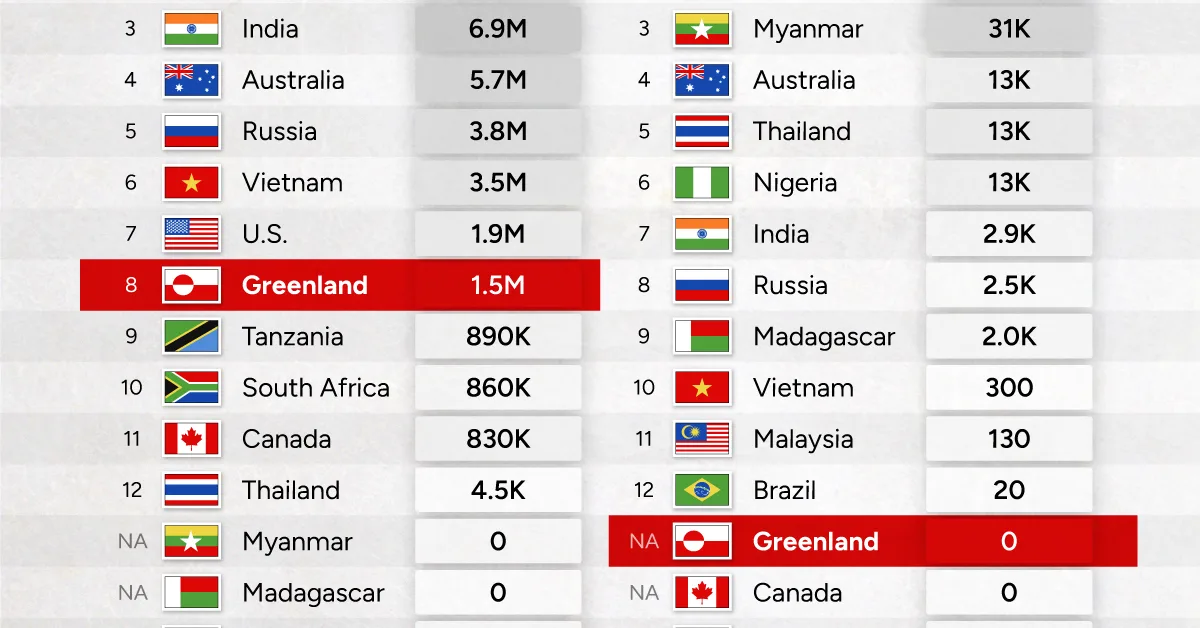
The conservative think tank American Action Forum (AAF) approached the potential price tag for Greenland using various methods. The experts calculated and estimated the value of the island's mineral resources, arriving at a figure of $4.4 trillion. Rare earth elements, at $1.5 trillion, and crude oil, at $1.4 trillion, represented the largest single items. These were followed, at a considerable distance, by the transition metal hafnium and natural gas.
Excluding crude oil and natural gas, which cannot be extracted in Greenland under current legislation, the value drops to $2.7 trillion. Furthermore, considering only the known mineral resources whose extraction is economically viable, the value falls to $186 billion. Extraction is often impossible or prohibitively expensive due to the geology, the lack of road, rail, and electricity infrastructure, and the limited labor supply. Currently, there are only a handful of active mines. Mining plays a negligible economic role.
Another approach by the AAF is based on a previous purchase offer of $100 million. This offer was made by US President Harry Truman in 1946, after World War II, for the purchase of Greenland. Adjusted for inflation, the price at that time would be equivalent to $1.6 billion today. However, if one were to take the $100 million as a percentage of the US GDP at that time and factor in economic growth since then, the AAF estimates a current value of $12.9 billion.
Further calculations are based on past land purchases by the US. For example, the United States acquired the Virgin Islands at the beginning of the 20th century, as well as Louisiana, Florida, Alaska, and Gadsden (now located in the southern part of the states of Arizona and New Mexico) in the 19th century.In these cases, one can also extrapolate the purchase prices at the time to their current values, or one can look at what percentage of the purchase price at that time was a relative of the US GDP and then extrapolate those values to today's levels. According to the AAF, this method yields purchase prices ranging from $12 billion (in the case of the Virgin Islands) to $890 billion (in the case of Louisiana).
A fourth model is based on a comparison with Iceland, which also has an interesting geostrategic location. The value of all private and commercial real estate there is estimated at $131 billion, which translates to $1.3 billion per square kilometer. Extrapolating this figure to the area of Greenland yields a value of $2.8 trillion. However, this calculation does not take into account that Greenland, due to its ice sheet, is significantly more difficult to settle than the much less icy Iceland.
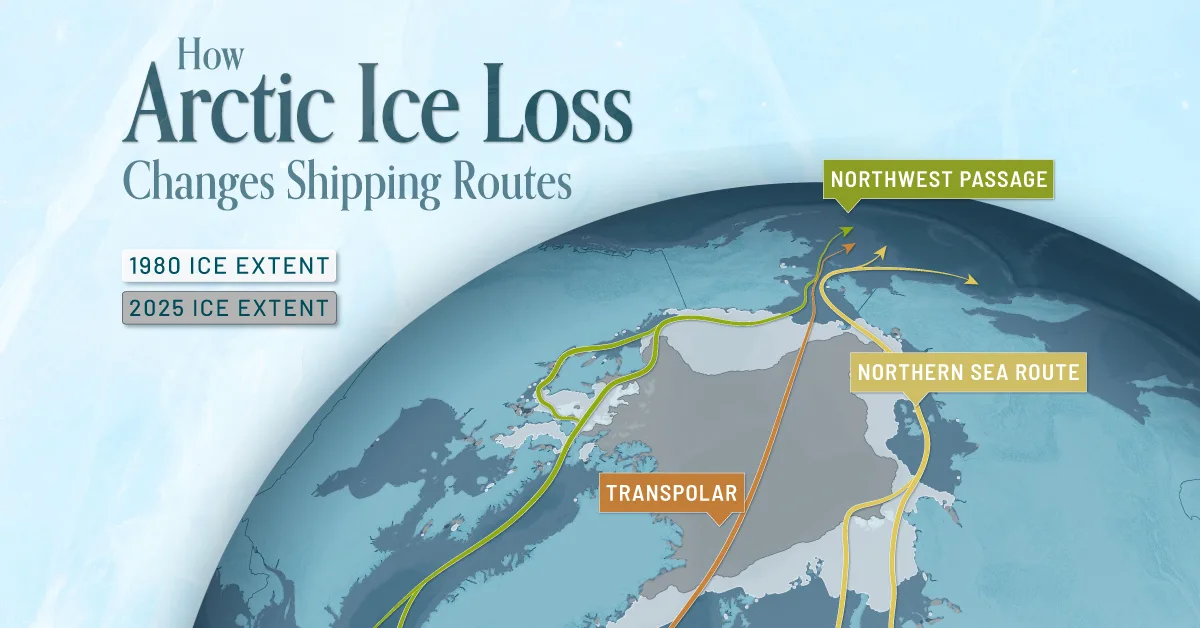
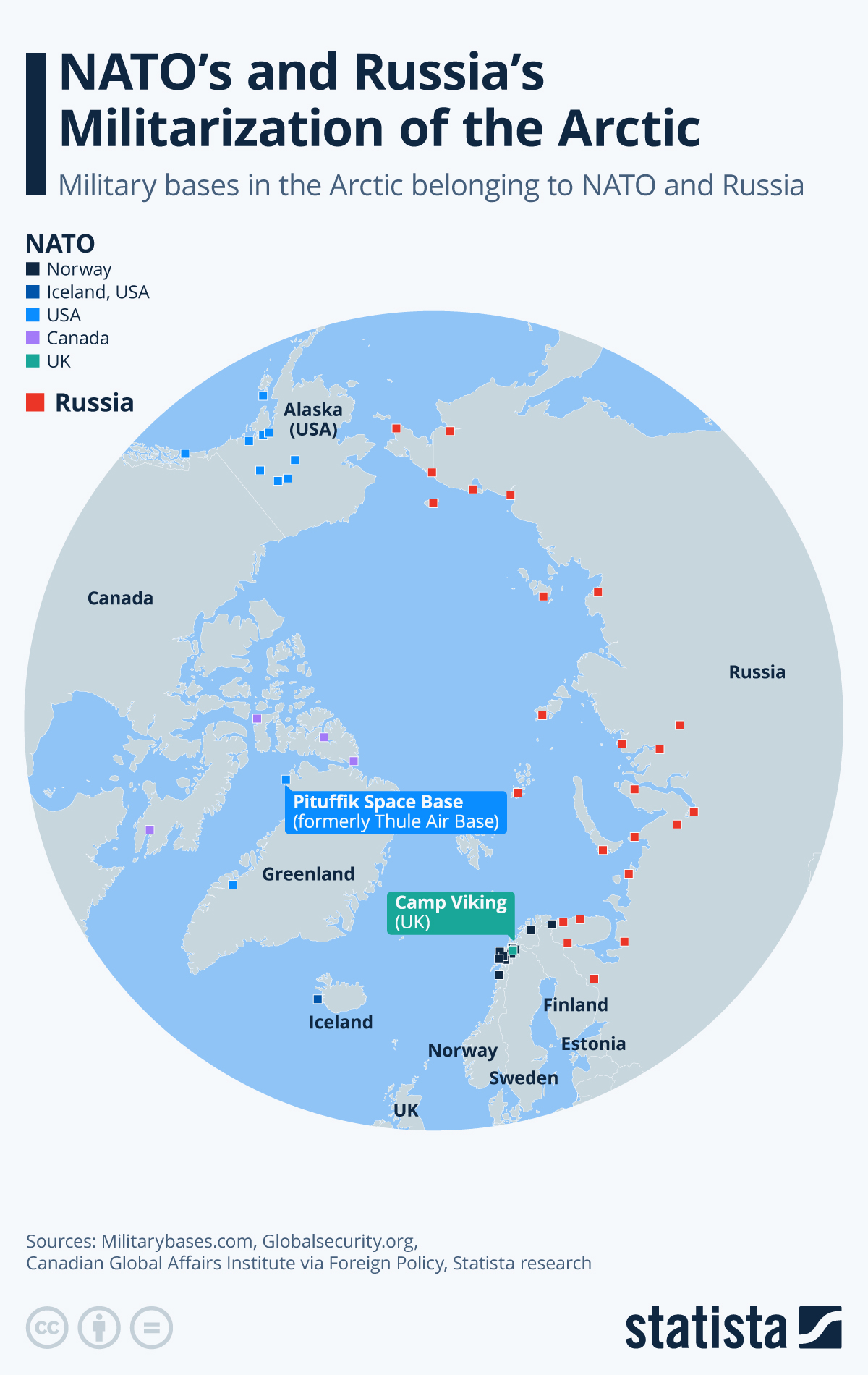
The calculations show that there are several ways to approach the price tag for Greenland. Approaches based primarily on fundamental data focus on tangible assets, such as raw materials and real estate, or the country's economic output, which is heavily dependent on fishing.Intangible assets, such as the strategic importance of controlling shipping lanes or defending against enemies, are much more difficult to quantify. This is why such valuations are currently lacking.To create more clarity, the US would have to put forward a concrete offer beyond academic estimates. Ideally, there would then be a counter-offer, for example from China, Russia, or the EU. But that is unlikely to happen.
Personal opinion which is worth nothing because it is my gut feeling. I think the citizens of Greenland would be pretty stupid to exchange access to public health care for like 100.000 Euros per capita. Maybe only the ones who are able to vote. This would be a horrible trade. Maybe you could bribe me with 500.000 Euros.
I am too uncertain to give a price in order to buy it. If I were Denmark I would not sell in most cases.
I will use google translator to translate the most important parts.
Mineral Resources Worth a Mid-Trillion Dollar Value
The conservative think tank American Action Forum (AAF) approached the potential price tag for Greenland using various methods. The experts calculated and estimated the value of the island's mineral resources, arriving at a figure of $4.4 trillion. Rare earth elements, at $1.5 trillion, and crude oil, at $1.4 trillion, represented the largest single items. These were followed, at a considerable distance, by the transition metal hafnium and natural gas.
Excluding crude oil and natural gas, which cannot be extracted in Greenland under current legislation, the value drops to $2.7 trillion. Furthermore, considering only the known mineral resources whose extraction is economically viable, the value falls to $186 billion. Extraction is often impossible or prohibitively expensive due to the geology, the lack of road, rail, and electricity infrastructure, and the limited labor supply. Currently, there are only a handful of active mines. Mining plays a negligible economic role.
Another approach by the AAF is based on a previous purchase offer of $100 million. This offer was made by US President Harry Truman in 1946, after World War II, for the purchase of Greenland. Adjusted for inflation, the price at that time would be equivalent to $1.6 billion today. However, if one were to take the $100 million as a percentage of the US GDP at that time and factor in economic growth since then, the AAF estimates a current value of $12.9 billion.
Further calculations are based on past land purchases by the US. For example, the United States acquired the Virgin Islands at the beginning of the 20th century, as well as Louisiana, Florida, Alaska, and Gadsden (now located in the southern part of the states of Arizona and New Mexico) in the 19th century.In these cases, one can also extrapolate the purchase prices at the time to their current values, or one can look at what percentage of the purchase price at that time was a relative of the US GDP and then extrapolate those values to today's levels. According to the AAF, this method yields purchase prices ranging from $12 billion (in the case of the Virgin Islands) to $890 billion (in the case of Louisiana).
A fourth model is based on a comparison with Iceland, which also has an interesting geostrategic location. The value of all private and commercial real estate there is estimated at $131 billion, which translates to $1.3 billion per square kilometer. Extrapolating this figure to the area of Greenland yields a value of $2.8 trillion. However, this calculation does not take into account that Greenland, due to its ice sheet, is significantly more difficult to settle than the much less icy Iceland.
The calculations show that there are several ways to approach the price tag for Greenland. Approaches based primarily on fundamental data focus on tangible assets, such as raw materials and real estate, or the country's economic output, which is heavily dependent on fishing.Intangible assets, such as the strategic importance of controlling shipping lanes or defending against enemies, are much more difficult to quantify. This is why such valuations are currently lacking.To create more clarity, the US would have to put forward a concrete offer beyond academic estimates. Ideally, there would then be a counter-offer, for example from China, Russia, or the EU. But that is unlikely to happen.
Personal opinion which is worth nothing because it is my gut feeling. I think the citizens of Greenland would be pretty stupid to exchange access to public health care for like 100.000 Euros per capita. Maybe only the ones who are able to vote. This would be a horrible trade. Maybe you could bribe me with 500.000 Euros.
I am too uncertain to give a price in order to buy it. If I were Denmark I would not sell in most cases.